Teeth Whitening at the Dentist vs At Home: Cost and Results
In-office whitening ($400–$1,000 per session) is the fastest route to a whiter smile — one 60–90 minute visit, several shades lighter. Custom take-home trays ($200–$500) get similar results over 2–4 weeks and are the best value in professional whitening. OTC strips ($20–$60) handle light surface stains but can’t match professional strength. (60 words)
Key takeaways
- In-office whitening: $400–$1,000 per session, 60–90 minutes, results in one visit.
- Dentist custom take-home trays: $200–$500, worn 2–4 weeks — quietly the best value in professional whitening.
- OTC strips: $20–$60, effective for light surface stains, 1–3 shades over weeks.
- Whitening doesn’t work on crowns, veneers, or fillings — and shouldn’t be done over untreated cavities or gum disease.
The options and what each costs
| Option | 2026 cost | Time to results | Typical improvement |
|---|---|---|---|
| In-office (dentist) | $400–$1,000/session | 1 visit (60–90 min) | Several shades |
| Light/laser-activated in-office | $500–$1,500 in expensive markets | 1 visit | Several shades |
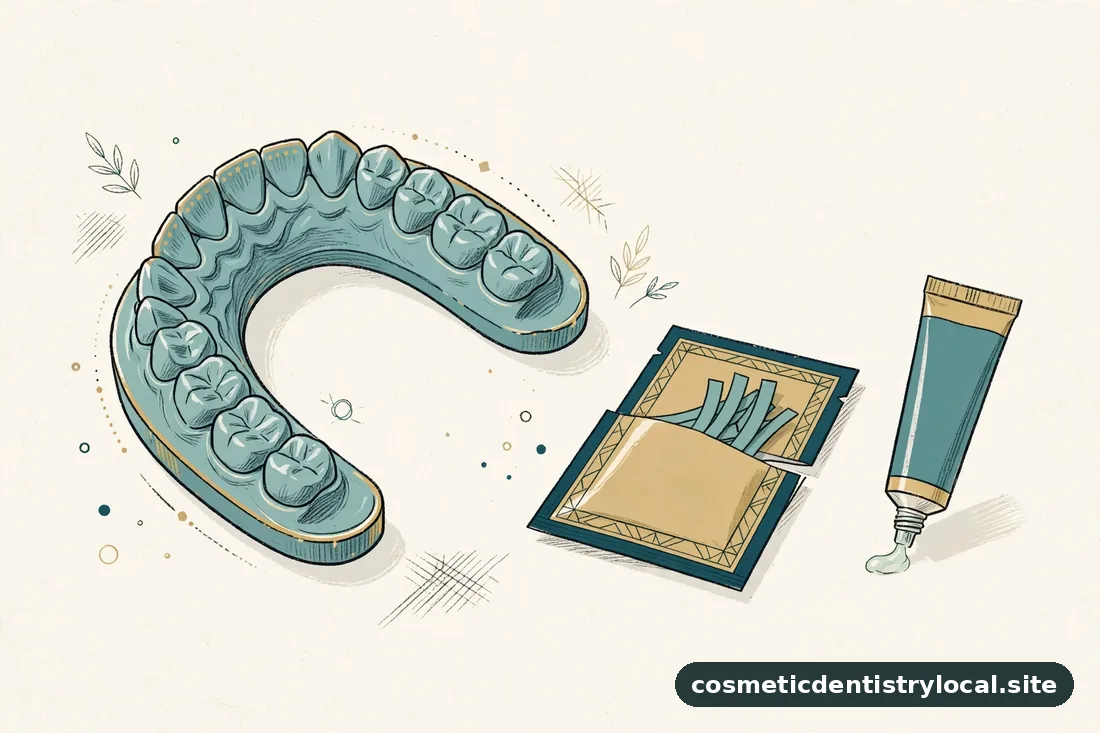
| Dentist custom take-home trays | $200–$500 | 2–4 weeks daily wear | 4–6 shades |
| OTC whitening strips | $20–$60 | 2–4 weeks daily use | 1–3 shades |
| OTC LED kits | $50–$200 | 1–3 weeks | 1–3 shades |
| Whitening toothpaste | $5–$15 | Ongoing | Surface stains only |
Cost ranges reflect published 2026 US pricing (Source: https://health.creamytales.com/professional-teeth-whitening-cost-vs-at-home-kits/ — in-office $400–$1,000, custom trays $200–$500, refill syringes $30–$60, verified via search 2026-09-29).
The price ladder is steep: a single in-office session can cost 10–20x a box of strips. But comparing box prices is the wrong math — what you’re buying is shades of improvement per dollar, which is the next section.
Cost per shade: the honest math
Nobody advertises cost-per-shade, so let’s work it out with typical figures:
- In-office at $650, gaining ~5 shades: ~$130 per shade, delivered in one afternoon.
- Custom trays at $350, gaining ~5 shades: ~$70 per shade — roughly half the cost per shade of in-office, spread over a few weeks.
- Strips at $45, gaining ~2 shades: ~$23 per shade — the cheapest per shade by far, if two shades is all you need.
The catch: strips plateau. They use lower peroxide concentrations (safe without supervision), so deep or intrinsic discoloration — tetracycline staining, fluorosis, age-darkened dentin — barely moves. If you need 5+ shades of change, strips at any price won’t get you there; you’d spend $45 repeatedly for diminishing returns.
There’s also a hidden cost to strips that rarely gets mentioned: uneven results. Stock strips fit everyone approximately. Teeth with existing restorations, uneven surfaces, or gum recession can whiten patchily — and whitening doesn’t change the color of crowns, veneers, or fillings, so a smile with front-tooth restorations can end up less uniform after strips than before.
For the full whitening price landscape, see our professional teeth whitening cost guide and the whitening strips vs dentist comparison.
Speed, strength, and supervision
The three things you’re actually paying for at the dentist:
- Strength. In-office whitening uses high-concentration hydrogen peroxide (typically 25–40%), far stronger than anything sold over the counter. That’s what moves deep stains in a single session.
- Protection. The dentist isolates your gums and lips with barriers before the gel goes on. OTC products rely on you to keep gel off soft tissue — the source of most gum irritation complaints with strips and kits.
- Assessment. A dentist checks why your teeth are discolored before whitening. Surface stains from coffee respond beautifully; graying from thin enamel or dead nerves doesn’t respond to whitening at all — and no amount of strips will change that. Paying $45 for strips when the problem needs a veneer is the most common whitening money-waster.
Sensitivity is the main side effect across all methods — temporary tooth sensitivity during and after treatment is common with professional-strength products. Dentists can adjust concentration and add desensitizing treatments; at home, you’re on your own with the instructions on the box.
What a first in-office visit actually involves
Knowing the sequence takes the mystery (and some of the sticker shock) out of the $400–$1,000 session:
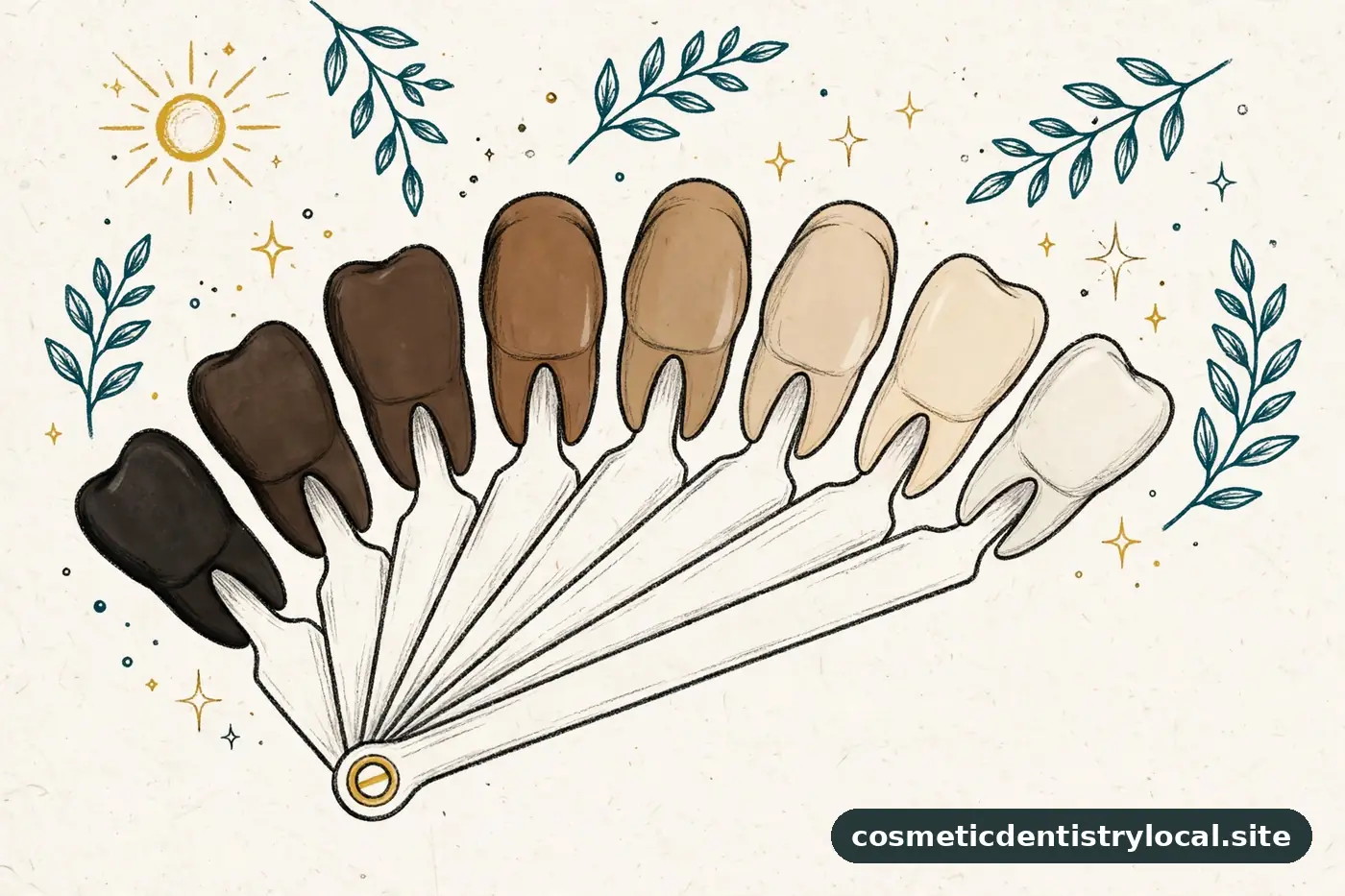
- Shade check. The dentist records your starting shade against a guide — this is your before/after proof, so make sure it happens.
- Cleaning (sometimes separate). Whitening works best on clean teeth; some offices do a polish first, occasionally billed separately ($75–$200).
- Isolation. Cheek retractors, protective gel or dams on the gums and lips. This setup is a big part of what you’re paying for.
- Gel cycles. Professional gel is applied in 2–4 rounds of about 15 minutes each, sometimes with a light to accelerate the reaction.
- Rinse, shade check, aftercare. You’ll leave with instructions and usually a warning about 24–48 hours of sensitivity and avoiding staining foods.
Total chair time: 60–90 minutes. Ask upfront whether the quoted price includes the pre-whitening cleaning and any take-home touch-up gel — those are the two line items most often billed separately.
How long results last
Whitening is not permanent — it’s maintenance. Published 2026 guides put typical longevity at:
- In-office: results last 6–12 months, sometimes up to 18 months depending on diet and habits; touch-ups run $200–$400.
- Custom trays: the trays themselves last for years; touch-up gel syringes cost $30–$60. This is why trays win on long-term value — the ongoing cost is nearly zero.
- Strips/kits: results fade over months; maintaining them means buying more product indefinitely.
Coffee, tea, red wine, and tobacco are the big four result-killers. Someone who drinks three coffees a day will need touch-ups roughly twice as often as someone who doesn’t — factor that into your real annual cost. A $650 in-office session touched up yearly at $300 is a $950/year habit; trays at $350 plus $45/year in gel is under $400/year after year one.
When to see a dentist first (non-negotiable)
This is the section that matters most and gets skipped most. Do not whiten over untreated dental problems. Whitening gel on a cavity, cracked tooth, or inflamed gums can cause sharp pain and make the underlying problem worse. See a dentist first if:
- You have untreated cavities, broken fillings, or cracked teeth
- Your gums bleed, are swollen, or have receded significantly
- You have crowns, veneers, or large fillings on front teeth (they won’t whiten — you’ll get a two-tone smile)
- Your teeth are already very sensitive
- The discoloration is on a single dark tooth (may indicate a dead nerve, which needs evaluation, not bleach)
A pre-whitening exam is the cheapest step in this whole process — and it’s the one that prevents the expensive mistakes. Our complete cost guide puts whitening in context with every other cosmetic procedure’s pricing.
The quiet winner: custom take-home trays
If this guide had to pick one option for most people, it would be dentist-supervised custom take-home trays ($200–$500). The case:
- Professional-strength gel (stronger than OTC, gentler protocol than in-office)
- Custom fit = even results and minimal gum irritation
- Trays last for years; touch-ups cost $30–$60 in gel
- Total first-year cost often undercuts a single in-office session
- A dentist has already checked your teeth before you start
In-office whitening still wins when you have a deadline — a wedding in two weeks, photos next weekend. Strips still win when the budget is $50 and the stains are light surface discoloration. But for everyone in between, trays are the value play the industry doesn’t advertise as loudly as the $1,000 laser session.
FAQ
Does dental insurance cover teeth whitening?
No — whitening is the textbook elective cosmetic procedure, and standard dental insurance plans don’t cover it. You’ll pay the full cost out of pocket regardless of the method. (The rare exception: whitening as part of reconstructing a tooth damaged in an accident, which is billed as restorative work, not whitening.)
Can whitening damage enamel?
Whitening products from reputable manufacturers, used as directed, don’t damage healthy enamel — but they can cause temporary sensitivity, and misuse (overuse, leaving strips on too long, using products on damaged teeth) can irritate gums and increase sensitivity. Custom trays from a dentist are the lowest-risk professional option because the fit keeps gel off gums and the concentration is calibrated to your teeth.
Why didn’t whitening strips work on my teeth?
Three common reasons: the stains are intrinsic (inside the tooth, not on the surface), you have restorations (crowns, veneers, fillings) that don’t whiten, or the discoloration comes from thin enamel showing dark dentin underneath. A dentist can identify which one applies in a single exam — and tell you whether whitening, bonding, or veneers is the actual fix.
How white is too white?
When the shade doesn’t match the whites of your eyes or looks flat and opaque in photos, it’s gone too far — dentists call it the “chiclet” look. A natural result is usually 2–4 shades lighter than your starting point, not the brightest shade on the guide. Good dentists will tell you when to stop; a shade guide comparison at each stage keeps expectations honest.
The Smile Ledger is a price-research publication. This is general information, not medical or dental advice — talk to your dentist about your situation.