
Professional Teeth Whitening Cost in 2026: Dentist vs At-Home
Professional teeth whitening costs $400 to $1,200 per in-office session in 2026, while dentist-made take-home trays run $300–$600 and OTC strips cost $20–$100. Whitening is the most price-variable cosmetic treatment in dentistry — the gap between the cheapest and most expensive route is more than 10x, and the results differ just as dramatically.
The Full 2026 Price Comparison
| Method | Typical range | Results timeline | How long it lasts |
|---|---|---|---|
| In-office professional (standard) | $400–$1,200 | 1–2 hours | 6–12 months |
| In-office, premium brand (Zoom-type) | $500–$1,500 | 1–2 hours | 6–12 months |
| Dentist custom take-home trays | $300–$600 | 7–14 days | 6–12 months |
| LED whitening kits (OTC) | $50–$200 | 1–2 weeks | 3–6 months |
| Whitening strips (OTC) | $20–$100 | 3–7 days | 3–6 months |
| Whitening toothpaste | $5–$15 | 2–4 weeks (subtle) | Ongoing use |
| Whitening pens | $15–$50 | Weeks (subtle) | 2–4 months |
These ranges come from a 2026 in-office vs. at-home whitening cost guide and CareCredit’s published procedure costs, which list in-office laser whitening at an average of $792 and UV whitening at $583. The in-office average most sources cite lands around $500–$900 per session.
Key takeaways
- In-office whitening: $400–$1,200 per session, fastest and most dramatic results.
- Dentist take-home trays: $300–$600, nearly as effective over 7–14 days — often the best value.
- OTC strips: $20–$100, modest results lasting 3–6 months; fine for maintenance.
- Dental insurance does not cover whitening — it’s classified as purely cosmetic.
In-Office Whitening: What You’re Paying For
An in-office session isn’t just stronger gel — it’s a controlled clinical procedure. A standard appointment includes a shade assessment, protective barriers for gums and lips, professional-grade gel (typically 15–25% hydrogen peroxide, far stronger than OTC), and 3–4 application cycles of about 15 minutes each. Total chair time: 60–90 minutes.
What the price buys over at-home options:
- Speed. Visible results in a single appointment — the only option if you have an event coming up.
- Strength. Professional gel concentrations can’t legally be sold over the counter in most formulations.
- Supervision. The dentist monitors gum protection and can stop or adjust if sensitivity spikes.
- Predictability. Shade guides and controlled application mean you know roughly what to expect.
What’s often not included: follow-up touch-ups (typically $200–$400), take-home maintenance trays ($100–$200 if not bundled), and sensitivity management. Ask whether the quote includes a touch-up visit — some offices bundle one, which meaningfully changes the value.
The sensitivity question. Temporary tooth sensitivity for 24–72 hours after in-office whitening is common. Using sensitivity toothpaste for a week or two before and after the appointment helps, as does avoiding very hot or cold foods for 48 hours. If you have cavities, cracked teeth, or gum disease, whitening should wait until those are treated — gel on damaged teeth can cause real pain. See a dentist first.
Dentist Take-Home Trays: The Value Pick
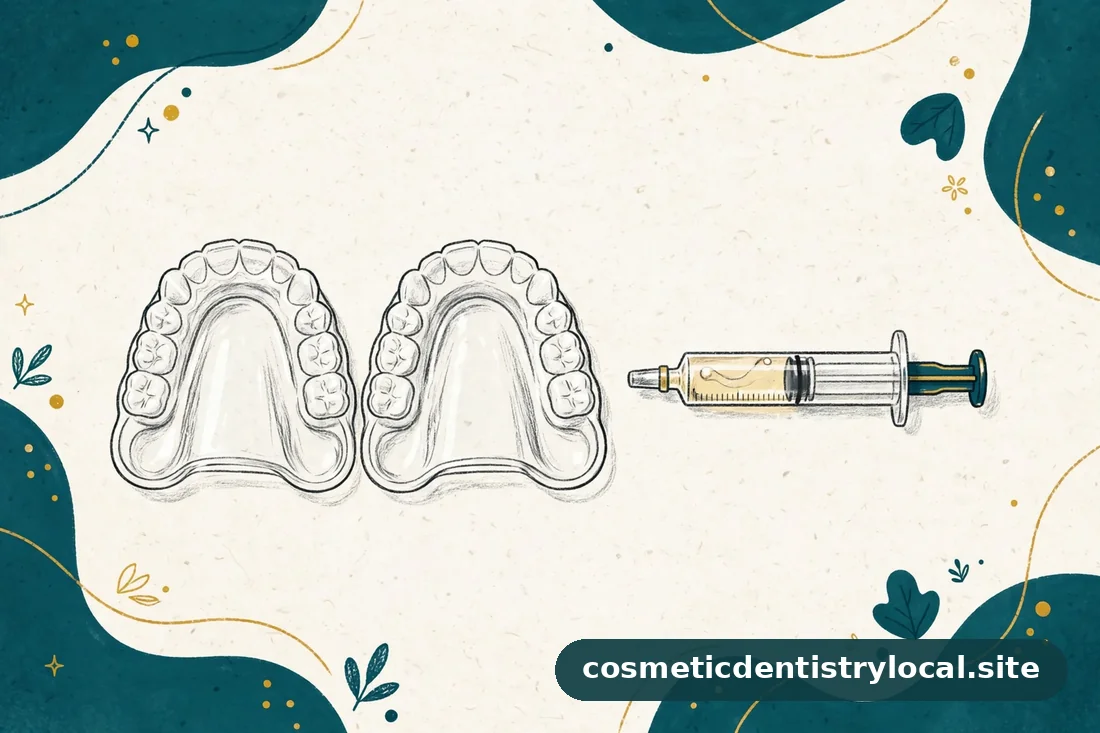
Custom trays from your dentist ($300–$600) are the option this site recommends most often for budget-conscious patients — and the math supports it. You get custom-fitted trays made from impressions of your teeth plus professional-grade gel (usually ~10% peroxide), worn 30 minutes to a few hours daily for 7–14 days.
The results end up close to in-office whitening — slightly less dramatic at the peak, but lasting the same 6–12 months. The advantages compound over time: you keep the trays for years, so future touch-ups cost only replacement gel ($30–$60). Over three years, the tray route can cost half as much as repeated in-office sessions.
The tradeoff is patience and compliance. You have to actually wear the trays daily for two weeks. If you’re the type to start strong and quit on day four, the in-office session’s one-and-done format may be worth the premium.
OTC Options: Strips, Toothpaste, and Pens
Whitening strips ($20–$100) are the best of the budget tier. They use low-concentration peroxide (usually 6–10%), show visible results in 3–7 days, and last 3–6 months. The limitation is fit — pre-made strips don’t conform to every tooth perfectly, so results are less even than custom trays. They’re excellent for maintenance between professional treatments.
Whitening toothpaste ($5–$15) deserves honest framing: it removes surface stains through mild abrasives and low peroxide, but it won’t change your teeth’s intrinsic shade. Think maintenance, not transformation.
Whitening pens ($15–$50) are the weakest option — convenient for touch-ups, unreliable as a primary method.
LED kits ($50–$200) sit between strips and trays. The light itself does little (the gel does the work), but the kits are convenient and produce moderate results over 1–2 weeks.
One critical limitation applies to all whitening: it only works on natural tooth structure. Crowns, veneers, bonding, and fillings don’t whiten. If you whiten around existing dental work, the natural teeth get brighter while the restorations stay put — which can make the dental work look worse. The standard sequence is whiten first, then have any new dental work shade-matched to the result.
The Cost-Per-Result Math
Sticker prices mislead; cost per month of brightness is the honest metric:
| Method | Upfront | Lasts | Approx. cost/month |
|---|---|---|---|
| In-office ($650 session) | $650 | 9 months | ~$72 |
| In-office + yearly touch-up | $650 + $300/yr | 12 months | ~$79 |
| Custom trays | $450 | 9 months | ~$50 |
| Trays + gel refills (3 yrs) | $450 + $120 | 36 months | ~$16 |
| Strips every 4 months | $50 × 3/yr | 12 months | ~$12.50 |
The pattern: the cheapest entry (strips) and the cheapest long-term (trays with refills) are different answers. If you want maximum brightness for an event, in-office wins. If you want sustained whiteness on a budget, trays plus refills win. If you want to spend almost nothing, strips on a schedule win.
For the deeper head-to-head — including which stains respond to which method — see our dentist vs. at-home whitening comparison and the whitening strips vs. dentist breakdown. And if whitening is step one of a bigger plan, our cosmetic dentistry cost guide shows how to sequence and budget the full smile.
What Affects Your Whitening Results
Not all teeth whiten equally, and knowing where you stand prevents disappointment:
Stain type matters most. Yellow-toned stains from food, drink, and aging respond best to whitening — these are the cases that produce dramatic before-and-after differences. Gray or brown discoloration (often from tetracycline antibiotics or fluorosis) responds poorly; these cases may need veneers or bonding instead of repeated whitening attempts.
Natural shade sets the ceiling. Whitening typically lifts teeth 2–8 shades on the professional shade guide. If your teeth are already fairly light, the visible change will be subtle. Dentists can assess your baseline shade and give a realistic expectation before you spend anything — ask for this during the consultation.
Existing dental work complicates things. As noted above, crowns, veneers, and bonding don’t respond to whitening gel. If you have visible restorations, discuss the plan with your dentist first: the usual approach is to whiten the natural teeth, wait two weeks for the shade to stabilize, then replace or re-shade the restorations to match.
Age and enamel thickness play a role. Younger teeth with thicker enamel often whiten more readily. Very thin or worn enamel may whiten unevenly and increase sensitivity risk — another reason the pre-whitening dental checkup earns its keep.
The bottom line: whitening is the highest-value first step in most smile plans because it’s the cheapest way to find out how much of your concern is actually color. Many patients discover that whitening plus one or two bonding repairs achieves what they assumed required veneers — at a tenth of the price.
FAQ
How much does professional teeth whitening cost at the dentist?
$400 to $1,200 per in-office session, with most patients paying $500–$900. Premium branded systems (Zoom-type) can reach $1,500. CareCredit’s published data lists in-office laser whitening at a $792 average and UV whitening at $583. Touch-up sessions typically cost $200–$400. Wondering about the premium laser option specifically? Our laser whitening price analysis weighs whether it justifies the extra cost.
Is professional whitening worth it over strips?
It depends on your goal. In-office whitening is faster (one appointment) and more dramatic. But dentist-made take-home trays ($300–$600) achieve nearly the same result over two weeks and cost less long-term thanks to cheap gel refills. Strips ($20–$100) are fine for modest brightening and maintenance but can’t match professional results.
Does dental insurance cover teeth whitening?
No. Whitening is classified as purely cosmetic, and dental insurance doesn’t cover it — there are essentially no exceptions. Even when discoloration has a medical cause (like medication staining), most plans still exclude whitening. Budget as an out-of-pocket expense.
How long does teeth whitening last?
In-office and tray whitening typically last 6–12 months; strips last 3–6 months. Coffee, tea, red wine, and tobacco shorten results significantly. Maintenance with whitening toothpaste or periodic strip use can extend brightness between professional treatments.
Can whitening damage your teeth?
When done properly on healthy teeth, whitening is considered safe — the main side effect is temporary sensitivity lasting 1–3 days. The risk rises with damaged teeth: whitening gel on cavities, cracked teeth, or gum disease can cause significant pain and complications. That’s why a dental checkup before whitening isn’t just a formality — it’s the safety step.
Why do my teeth look yellow again after whitening?
Teeth re-stain because enamel is porous. Dark foods and drinks deposit pigments over months, and the effect is faster if you smoke or drink a lot of coffee. This is normal and expected — it’s why whitening is a maintenance expense, not a one-time fix. Touch-ups every 6–12 months keep the result stable.
This is general information, not medical or dental advice — talk to your dentist about your situation.