Dental Bonding Cost Per Tooth: 2026 Price Guide
Dental bonding costs $100 to $600 per tooth in the US in 2026, with a national average of $431 per tooth according to CareCredit’s published dentist procedure cost list (2024 Synchrony/ASQ360° research across US practices). It’s the cheapest professional cosmetic treatment available — a single visit, no lab, no temporaries.
Dental Bonding Prices in 2026
Bonding has the narrowest price band in cosmetic dentistry, which makes budgeting straightforward:
| Situation | Typical range | Notes |
|---|---|---|
| Single tooth, minor chip or gap | $100–$300 | 30–60 minute appointment |
| Single tooth, larger repair or reshape | $300–$600 | More sculpting time, possible shade layering |
| Multiple teeth (3–4, smile zone) | $400–$1,800 | Often discounted per tooth at volume |
| Bonding + whitening combo | $500–$1,500 | Whiten first, then match bonding shade |
CareCredit’s $431 national average sits right in the middle of the practical range. Unlike veneers, there’s no lab fee and no second appointment, so the quote you get is usually the price you pay — the main variables are the dentist’s time and the complexity of the sculpting.
One pricing quirk worth knowing: bonding for a chipped tooth repair is sometimes coded as restorative rather than cosmetic, which means it may partially qualify for insurance coverage. Bonding done purely to close a gap or change tooth shape is cosmetic and typically isn’t covered. The same procedure can land on either side of the line depending on why it’s being done — worth a conversation with both the dentist and the insurer.
Key takeaways
- Dental bonding averages $431 per tooth, ranging $100–$600 — the cheapest professional cosmetic option.
- It’s a single-visit procedure with no lab work: the quote is usually the final price.
- Bonding lasts 3–10 years depending on placement and habits; it stains faster than porcelain.
- Bonding for chip repair may qualify for partial insurance coverage as restorative work.
What the Procedure Actually Involves
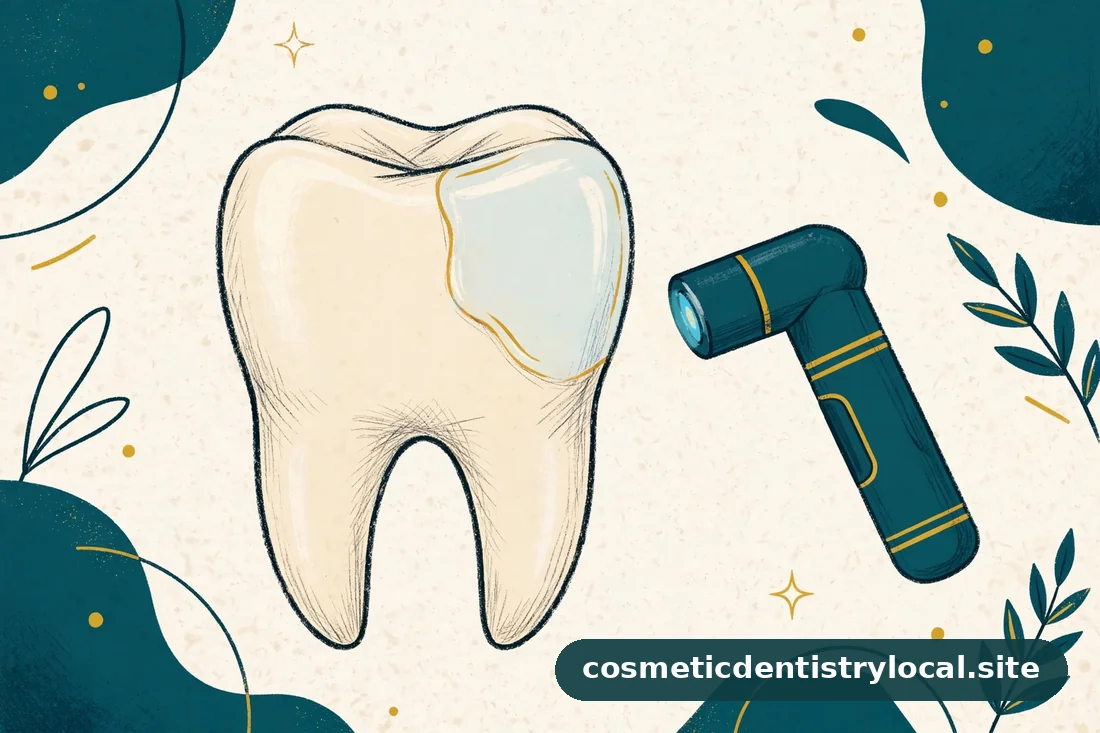
Bonding is refreshingly simple compared to most cosmetic dentistry. The dentist selects a shade of composite resin to match your teeth, roughens the tooth surface slightly, applies a conditioning liquid, then sculpts the resin directly onto the tooth in layers. Each layer is hardened with a curing light, then shaped and polished to blend with the natural tooth.
The whole appointment typically takes 30–60 minutes per tooth. There’s usually no anesthesia unless the bonding involves decay repair near the nerve. You walk out with the finished result — no temporaries, no two-week wait, no return visit for placement.
What bonding fixes well:
- Chips and cracks — the classic use case; a chipped front tooth can look new in under an hour
- Small gaps — closing minor spacing between front teeth without orthodontics
- Discoloration — covering a single stained tooth that doesn’t respond to whitening
- Misshapen teeth — lengthening a short tooth or evening out an irregular edge
- Exposed roots — covering root surfaces exposed by gum recession (also reduces sensitivity)
What it doesn’t fix: major misalignment, large gaps, severely discolored teeth across the whole smile, or teeth weakened by large fillings. Those cases need veneers, crowns, or orthodontics — bonding stretched beyond its limits looks lumpy and fails early.
How Long Does Bonding Last?
Bonding typically lasts 3–10 years, with most sources clustering around 5 years for front-tooth cosmetic work. That wide range isn’t vagueness — it reflects genuinely different outcomes based on:
Placement. Bonding on a biting edge (lengthening a tooth) takes more stress and chips sooner than bonding on a front surface. Edge repairs may need touch-ups within a few years.
Habits. Nail-biting, ice-chewing, teeth-grinding, and using teeth as tools are the four horsemen of bonding failure. A night guard for grinders can double the lifespan.
Staining. Composite resin is porous compared to porcelain. Coffee, tea, red wine, and tobacco stain bonding over time in a way they don’t stain porcelain veneers. The staining is gradual — year three looks noticeably duller than day one for heavy coffee drinkers.
Maintenance. Bonding can’t be whitened — whitening gel only works on natural tooth structure. If the surrounding teeth are whitened later, old bonding will look darker by comparison and may need replacement to match.
The honest framing: bonding is a medium-term solution with a low entry price, not a permanent fix. Budget for eventual replacement or upgrade, and it remains one of the best values in cosmetic dentistry.
Bonding vs. Veneers: The Real Tradeoff
This is the comparison that matters for anyone with a chipped or gapped front tooth. Porcelain veneers average $1,455 per tooth — roughly 3x the price of bonding. What does 3x buy?
| Factor | Bonding | Porcelain veneers |
|---|---|---|
| Cost per tooth | $100–$600 (avg $431) | $1,020–$2,506 (avg $1,455) |
| Appointments | 1 | 2–3 |
| Enamel removal | Minimal to none | ~0.5mm (irreversible) |
| Lifespan | 3–10 years | 10–20 years |
| Stain resistance | Moderate (stains over time) | Excellent |
| Repairability | Easy — can be patched | Chip usually means full replacement |
| Reversibility | Reversible | Permanent commitment |
The decision usually comes down to time horizon and budget. Bonding wins for: single-tooth fixes, younger patients who may want veneers later, tight budgets, and anyone who wants to “test-drive” a cosmetic change before committing to irreversible enamel removal. Veneers win for: full-smile transformations, heavy coffee/tea drinkers (stain resistance), and anyone who wants to do the work once and forget about it for 15 years.
Our full veneers vs. bonding comparison goes deeper into which cases favor each option — including the scenarios where dentists themselves recommend bonding first.
Getting the Most From Bonding
Bonding is cheap, but cheap work done badly is still wasted money. A few things that separate good bonding from disappointing bonding:
Shade matching in natural light. Composite comes in many shades, and the difference between a good match and a visible patch is the dentist’s eye. Ask to see the shade selection before curing — after curing, it’s permanent until polished off.
Whiten first. If you’re considering whitening, do it 2–4 weeks before bonding. The dentist can then match the resin to your whitened shade. Doing it in reverse means the bonding stays darker than your newly whitened teeth.
Ask about the polish. A well-polished bonding surface resists staining longer and feels smoother against your tongue. It takes the dentist an extra few minutes and makes a real difference in how long the work looks good.
Protect the investment. If you grind your teeth, a night guard ($300–$600 custom, less for OTC) protects both bonding and natural teeth. For a $400 bonding repair, a night guard may seem disproportionate — until the repair chips in year two.
Know when to upgrade. Bonding that needs re-doing every 2–3 years on the same tooth is telling you something. At that point, the lifetime cost math starts favoring a veneer. Our cosmetic dentistry cost guide shows how to run that comparison for your own case.
FAQ
How much does dental bonding cost per tooth?
$100 to $600 per tooth, with a national average of $431 (CareCredit, published dentist cost list). Simple single-tooth repairs land at the low end; multi-tooth smile-zone work or complex reshaping reaches the high end. Most quotes are all-inclusive since there’s no lab fee.
Is dental bonding covered by insurance?
Sometimes — it depends on the reason. Bonding to repair a chipped or decayed tooth may be classified as restorative and partially covered. Bonding done purely for appearance (closing gaps, reshaping) is cosmetic and typically excluded. Ask the office how they’ll code it before assuming coverage either way.
How long does teeth bonding last?
Typically 3–10 years, averaging around 5 years for front-tooth cosmetic bonding. Placement location, grinding habits, staining foods, and oral hygiene all affect lifespan. Bonding on biting edges wears faster than bonding on front surfaces.
Can bonded teeth be whitened?
No — whitening gel only works on natural tooth enamel, not composite resin. If you whiten after bonding, your natural teeth will lighten while the bonding stays the same shade, creating a mismatch. Always whiten before getting bonding placed, and have the resin matched to the whitened result.
Does dental bonding look natural?
Good bonding looks very natural — the resin is shade-matched and sculpted to blend with the surrounding tooth. The quality depends heavily on the dentist’s skill with shade selection and shaping. It won’t have porcelain’s translucency under close inspection, but at conversational distance, well-done bonding is essentially invisible.
Is bonding better than veneers?
Neither is universally better. Bonding is cheaper ($431 vs. $1,455 average), single-visit, reversible, and easily repaired — but lasts 3–10 years and stains over time. Veneers cost more and require enamel removal but last 10–20 years with superior stain resistance. For single-tooth fixes and tight budgets, bonding usually wins; for full-smile transformations, veneers usually win.
Does bonding hurt?
Usually not. Most cosmetic bonding requires no anesthesia because the dentist isn’t drilling into the tooth — just roughening the surface slightly. You may feel vibration from the polishing tools but not pain. If the bonding involves repairing decay or work near the gumline, the dentist may numb the area as a precaution.
Can bonding fix a gap between front teeth?
Yes — closing small gaps (diastemas) is one of bonding’s best uses. The dentist builds up the sides of the two adjacent teeth with resin until the gap closes. It works well for gaps up to about 2mm; larger gaps may look unnaturally wide-toothed with bonding alone and might be better served by veneers or orthodontics. Your dentist can show you a mock-up of the expected result before committing.
How do I find a dentist who’s good at bonding?
Bonding is technique-sensitive — the result depends on the dentist’s eye for shade and shape, not on expensive equipment. Ask to see before-and-after photos of the dentist’s own bonding cases (not stock images), specifically single-tooth repairs similar to yours. A dentist who does a lot of cosmetic bonding will have a portfolio ready; hesitation to show one is a signal to keep looking.
This is general information, not medical or dental advice — talk to your dentist about your situation.