Porcelain Veneers Cost Per Tooth in 2026 (Full Price Table)
Porcelain veneers cost $1,020 to $2,506 per tooth in the US in 2026, averaging $1,455 — so a typical 6-tooth case runs roughly $6,000 to $15,000. Figures from CareCredit’s veneers cost guide (August 2026), based on 2026 ASQ360° research across all 50 states.
The 2026 Per-Tooth Price Table
CareCredit’s 2026 veneers cost guide breaks veneer pricing down by material and by single tooth vs. full set. Here’s the complete table:
| Veneer type | Average per tooth | Typical range |
|---|---|---|
| Porcelain (standard) | $1,455 | $1,020–$2,506 |
| Porcelain laminate / no-prep (e.g., Lumineers-type) | $1,781 | $1,243–$2,997 |
| Composite, made in the dental office | $751 | $541–$1,220 |
| Composite, made in a lab | $1,068 | $783–$1,760 |
| Full set (6–8 porcelain veneers) | $13,954 | $9,712–$24,046 |
A second data point comes from Aspen Dental’s published veneers pricing, which reports its network average at $1,359 per tooth for porcelain veneers with a range of $990–$2,169, based on 2026 internal data. That lines up well with CareCredit’s range — the center of gravity for porcelain is roughly $1,350–$1,450 per tooth.
Where you live moves the needle. CareCredit’s state breakdown shows average single-veneer costs from $1,257 in Mississippi to $1,771 in California, with New York at $1,659 and Texas at $1,437. If your quote sits outside your state’s band, ask why — it may be justified (complex case, premium lab), or it may be worth a second quote.
Key takeaways
- Porcelain veneers average $1,455 per tooth ($1,020–$2,506); a 6–8 tooth set averages $13,954.
- Aspen Dental’s 2026 network data: $1,359 per tooth average, $990–$2,169 range.
- Porcelain veneers typically last 10–20 years; composite alternatives last 5–7 years.
- Insurance rarely covers veneers; they are classified as elective cosmetic treatment.
What a Full Smile Actually Totals
Nobody buys one veneer for a smile makeover — the question is what 4, 6, or 8 teeth cost. Using CareCredit’s $1,455 average:
| Teeth treated | At $1,455 avg | At range low ($1,020) | At range high ($2,506) |
|---|---|---|---|
| 2 (spot fix) | $2,910 | $2,040 | $5,012 |
| 4 (front four) | $5,820 | $4,080 | $10,024 |
| 6 (standard smile) | $8,730 | $6,120 | $15,036 |
| 8 (wide smile) | $11,640 | $8,160 | $20,048 |
| 10 (upper arch) | $14,550 | $10,200 | $25,060 |
These are material-and-placement totals before the extras: consultation ($100–$300 if not bundled), tooth preparation, temporaries while the lab works, and any pre-treatment like gum contouring or cavity repair. A written treatment plan should list these separately — if it doesn’t, ask for one.
One underused strategy: treat only the teeth that show. If your smile reveals six teeth, veneering eight buys you two teeth nobody sees. A good cosmetic dentist will map your smile line before recommending a count.
Porcelain vs. Other Veneer Materials
Porcelain is the premium option for reasons that show up in daily life: it resists coffee, tea, and wine staining far better than composite resin, it reflects light more like natural enamel, and it holds its shape for a decade or more. Composite veneers — made chairside in one visit or in a lab — cost roughly half as much upfront ($541–$1,220 per tooth in-office) but stain more easily and typically need replacement within 5–7 years.
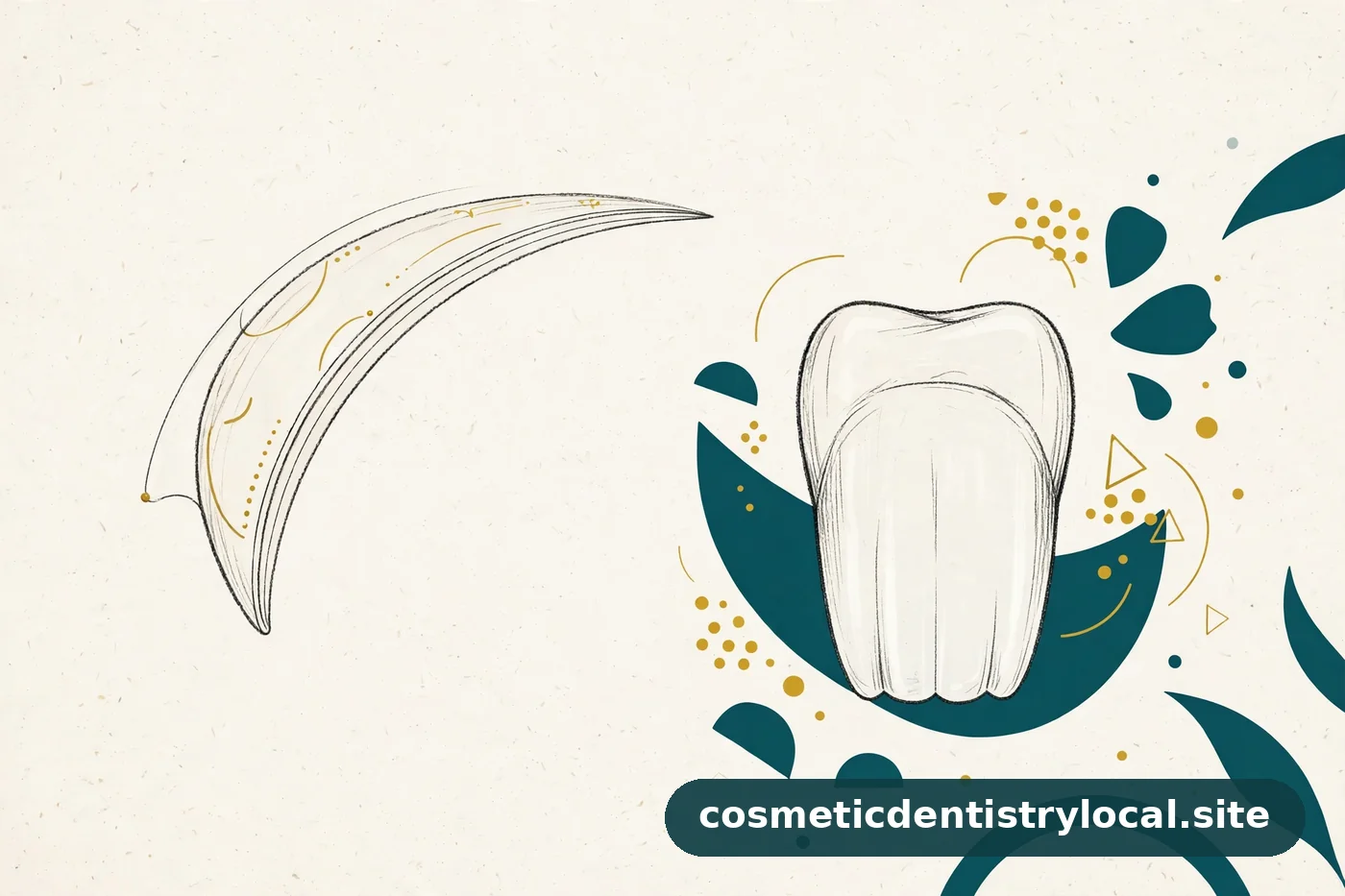
The no-prep laminate category (the best-known brand is Lumineers®) deserves its own note. At roughly 0.2mm thick versus porcelain’s 0.5mm, these can often be placed with little or no enamel removal — which makes the procedure reversible in a way traditional veneers aren’t. The tradeoff is price (average $1,781 per tooth, the highest of any category) and aesthetics: ultra-thin shells can look slightly bulky on some teeth. Our detailed Lumineers vs veneers comparison walks through who actually benefits from the no-prep route.
For the budget end of the spectrum, dental bonding costs $100–$600 per tooth and can fix chips and gaps in a single visit — though it won’t match porcelain’s lifespan or stain resistance.
What Makes One Quote Double Another
Understanding the levers lets you read a quote like a professional:
The lab. A veneer is half dentist, half ceramist. Premium labs charge the dentist more, and the difference shows in translucency and fit. Ask which lab the office uses and whether you can see their work.
The dentist’s cosmetic caseload. A dentist placing 200 veneer cases a year charges more than one placing 20 — and for complex smile design, that experience may be worth it. For a straightforward single-tooth veneer, it may not be.
Prep complexity. Minimal-prep cases are quicker. Teeth that need significant reshaping, bite adjustment, or gum work add chair time and cost.
Geography. As noted, the state-level spread is about 40% from lowest to highest average.
What’s included. Temporaries, follow-up visits, and a replacement warranty (if offered) can swing the effective price by $1,000+ on a multi-tooth case.
For the master overview of how cosmetic quotes are built — including the 17 individual cost factors — see our complete cosmetic dentistry cost guide.
The Lifespan Math Nobody Shows You
Here’s the calculation that changes how veneer pricing should be read. CareCredit’s guide gives the lifespans: porcelain veneers last 10–20 years with proper care, while composite veneers typically last 5–7 years. Aspen Dental describes porcelain as lasting 15+ years with proper care.
Run the numbers on a 6-tooth case over 20 years:
| Option | Upfront (6 teeth) | Replacements in 20 yrs | Rough 20-year total |
|---|---|---|---|
| Porcelain at $1,455/tooth | $8,730 | 1 (maybe) | $8,730–$17,460 |
| Composite office-made at $751/tooth | $4,506 | 3–4 cycles | $13,518–$22,530 |
The cheaper option can cost more over two decades. This doesn’t mean everyone should choose porcelain — if you may move, change dentists, or simply want a shorter commitment, composite’s lower entry price has real value. But evaluate the price over the time you’ll actually wear them, not just at checkout.
Also budget for the unglamorous part: veneers that require enamel removal are irreversible. Once enamel is gone, that tooth will always need a veneer or crown. That permanence is a cost too — it commits you to future replacement cycles. No-prep options avoid this, at a higher per-tooth price.

Getting an Accurate Quote: What to Ask
A veneer quote is only useful if it’s complete. Before you compare numbers, make sure every office answers the same questions — our checklist of questions to ask before getting veneers covers all fourteen:
- How many teeth are in the plan, and why that number? Ask the dentist to show you which teeth appear in your smile line. If two offices recommend different counts, ask each to justify theirs — the difference may be legitimate (different smile analysis) or may reflect upselling.
- What exactly is included? Consultation, X-rays, tooth preparation, temporaries, lab fees, placement visits, and follow-up adjustments should each be listed. A quote of $1,200 per tooth that excludes $400 of temporaries is really $1,600 per tooth.
- Which lab makes the veneers? You don’t need to become a ceramics expert, but knowing whether the work goes to a high-volume budget lab or a boutique ceramist explains a large part of any price gap.
- What happens if a veneer fails early? Ask about the replacement policy in writing. Some offices cover chips and debonding for 1–5 years; others charge full price from day one. This is effectively an insurance policy, and its absence has a cost.
- Is there a cash or paid-in-full discount? Many practices offer 5–10% off for payment upfront because it eliminates their financing risk. It never hurts to ask — the worst answer is no.
Get at least two written treatment plans before committing. On a 6-tooth case, the spread between quotes is often $2,000–$4,000, which makes an hour of comparison shopping one of the highest-paid hours of your year.
FAQ
How much do porcelain veneers cost per tooth in 2026?
$1,020 to $2,506 per tooth, with a national average of $1,455, according to CareCredit’s 2026 veneer cost guide (2026 ASQ360° research). Aspen Dental’s 2026 network data reports $990–$2,169 with a $1,359 average. Your state’s average may differ — from $1,257 in Mississippi to $1,771 in California.
How much is a full set of veneers?
A full set of 6–8 porcelain veneers averages $13,954 nationally, ranging from $9,712 to $24,046 (CareCredit, 2026). Six veneers at the $1,455 average total $8,730 before consultation, temporaries, or prep work.
Are porcelain veneers worth the money?
They can be, depending on your time horizon. Porcelain lasts 10–20+ years, resists staining, and looks the most natural. If you plan to keep them long-term, porcelain often costs less per year than composite alternatives that need replacing every 5–7 years. For short-term cosmetic fixes, composite bonding or veneers may be the smarter buy.
Does dental insurance cover porcelain veneers?
Almost never. Veneers are classified as elective cosmetic procedures, so standard dental plans exclude them. Partial coverage is possible only when a veneer is medically necessary — for example, restoring a tooth damaged by trauma — and even then it requires documentation and pre-authorization.
How long do porcelain veneers last?
With proper care, porcelain veneers typically last 10–20 years; some last longer. Composite veneers last 5–7 years. Longevity depends on oral hygiene, whether you grind your teeth (a night guard helps), and avoiding habits like chewing ice or opening packages with your teeth. For the full breakdown, see our guide on how long veneers last and what replacements cost.
Can you get veneers on just two teeth?
Yes. Single-tooth and two-tooth veneers are common for fixing a chipped, discolored, or slightly misshapen tooth. The challenge is shade-matching: the veneer must blend with your natural teeth, so many dentists recommend whitening first, then matching the veneer to the whitened shade.
This is general information, not medical or dental advice — talk to your dentist about your situation.