Full Mouth Reconstruction vs Smile Makeover: Cost Compared
A smile makeover is elective cosmetic work ($5,000–$30,000+), while a full mouth reconstruction is medically driven rebuilding that restores chewing, bite, and jaw health ($30,000–$100,000). The real difference is not price alone: insurance often helps with reconstruction because it treats disease, while makeovers are almost entirely out of pocket.
The 60-second distinction
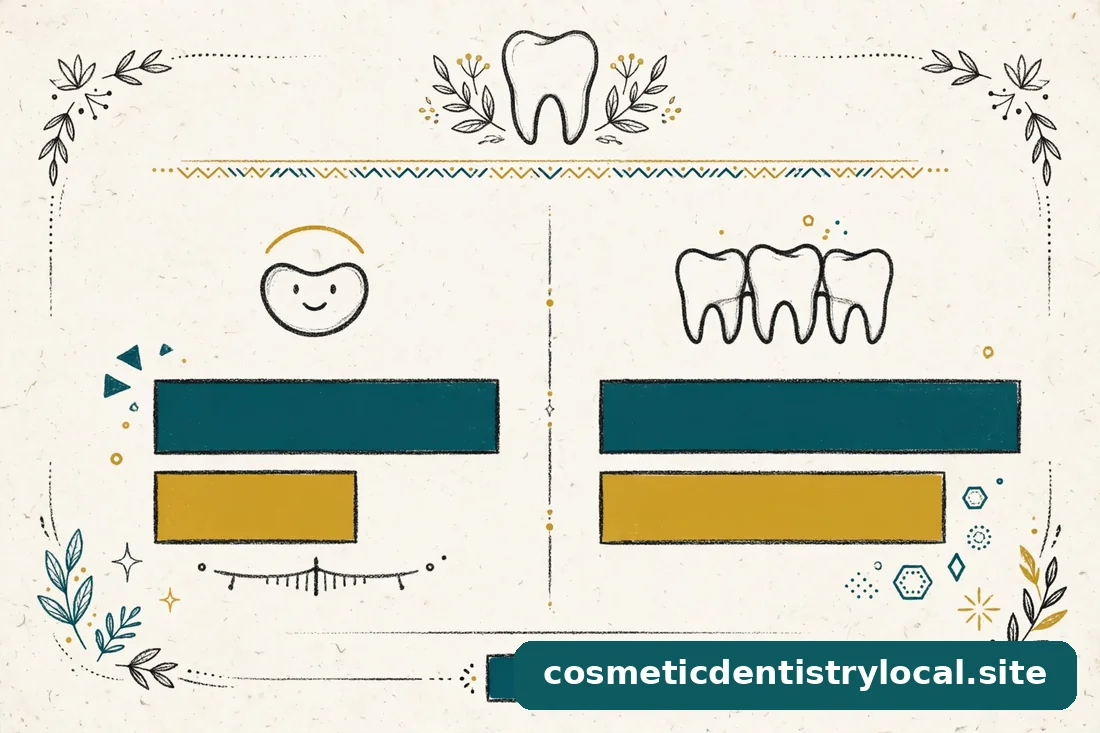
Think of it this way: a smile makeover changes how healthy teeth look. A full mouth reconstruction rebuilds teeth that are failing so they work. A makeover is measured in aesthetics — shade, symmetry, proportions. A reconstruction is measured in function — can you chew comfortably, does your bite line up, will the jaw stay healthy for the next twenty years.
This matters because patients often get quoted for one and need the other. A dentist proposing eight veneers on teeth with active gum disease or a collapsing bite is selling a cosmetic plan for a medical problem. The veneers may look lovely for a year, then fail on unhealthy foundations. Knowing the distinction protects both your wallet and your teeth.
What each one actually includes
A typical smile makeover combines cosmetic procedures on otherwise healthy teeth: porcelain veneers on the visible front teeth, professional whitening of the rest, sometimes gum contouring to even out a gummy smile, and bonding for minor chips. Nothing is broken or infected — the work is elective. Most plans target six to eight teeth, the ones that show when you smile, and leave the back teeth alone entirely.
A typical full mouth reconstruction is a sequenced treatment of many teeth because of damage or disease: dental implants to replace missing teeth, crowns to rebuild fractured or heavily filled teeth, sometimes gum therapy or bone grafting first, and bite correction so the forces of chewing spread evenly. It may involve an entire arch or both arches. Cosmetic appearance improves as a byproduct, but appearance is never the driver — durability is.
The overlap zone: a patient with worn-down, cracked front teeth may need crowns (reconstruction territory) that also happen to be made beautiful (makeover territory). The honest classification rests on the clinical reason for treatment, not the final photograph.
2026 cost comparison
Here are grounded 2026 US ranges, assembled from published practice and industry data:
| Smile makeover | Full mouth reconstruction | |
|---|---|---|
| Typical total | $5,000–$30,000+ | $30,000–$100,000 |
| Front-tooth implant (all-in) | rarely included | $3,000–$6,000+ per implant |
| All-on-4 per arch | rarely used | $25,000–$28,000 (published clinic pricing) |
| Crowns | sometimes 1–2 | $800–$3,000 per tooth, often many |
| Insurance contribution | near zero | sometimes meaningful |
| Typical timeline | 1–2 months | 8–18 months |
A smile makeover plan at the common six-to-eight-tooth scale runs roughly $6,000–$20,000 in porcelain. Push past eight teeth, add crowns and contouring, and you can reach $30,000 or more — but that is still elective work on a healthy mouth.
Reconstruction starts where implants enter. A single front-tooth implant runs $3,000–$6,000+ all-in, and one implant case may be the only “cosmetic” work a reconstruction includes. Real published pricing from a Chicago implant practice lists an all-inclusive single implant at $5,500, All-on-4 at $25,000–$28,000 per jaw, and a full-mouth individual-implant rebuild at $50,000 per arch — $100,000 for both jaws (New Teeth Chicago fee schedule). A full set of implants with simpler prosthetics lands lower, in the $30,000–$50,000 range depending on approach. The spread is wide because “full mouth reconstruction” describes severity, not a fixed procedure list.
The component math
Reconstruction bills look shocking until you itemize them. A mouth needing six implants ($5,500 each), ten crowns ($1,500 each), and a year of staged surgery reaches $50,000 without any single line being extravagant. Smile makeovers look shocking for the opposite reason: $20,000 for work nobody needs is entirely fair, and entirely optional.
Why reconstruction costs so much more
Three structural reasons:
- Surgery and staging. Implants, bone grafts, and extractions require surgical time, imaging, sedation, and months of healing between stages. Cosmetic veneers are two to four office visits over a few weeks; an implant reconstruction is a multi-season relationship with a dental office.
- Tooth count and complexity. Makeovers deliberately treat fewer teeth — usually just the smile zone. Reconstruction cannot skip damaged teeth; every failing tooth must be addressed or it threatens the whole plan. Ten implants cost ten times what one does, and the prosthetic work scales with them.
- Failure consequences. A veneer that chips is an inconvenience. An implant that fails to integrate is a surgical redo. The premium reflects the stakes, the lab work, and the experience level required.
Insurance: where they diverge
This is the practical fork in the road. Smile makeovers are almost never covered by dental insurance — veneers and cosmetic whitening are classified as elective, and plans pay nothing toward them.
Full mouth reconstruction often gets partial help, because much of it is medically necessary. Implants, crowns, and surgery that restore function may be covered in part — but “in part” needs a hard look. Most dental plans cap annual benefits around $1,000–$1,500, which barely dents a $40,000 plan; a Chicago implant practice notes that dental insurance typically covers up to $1,000–$1,500 per calendar year with no guarantee of payment (New Teeth Chicago).
The encouraging side: according to the National Association of Dental Plans’ 2026 State of the Market Report, annual maximum benefit levels have been climbing for years — 57% of commercially-insured consumers were in plans with annual maximums of $1,500 or more in 2024, up from 48% in 2023. And if you want the full picture of which cosmetic procedures your benefits might touch, see our breakdown of front-tooth implant pricing from the cosmetic angle.
Reality check for either path: insurance makes reconstruction less expensive, not cheap. And medical insurance sometimes covers the surgical portion of implant work — worth a call to both carriers before you assume anything.
Timelines: weeks vs a year
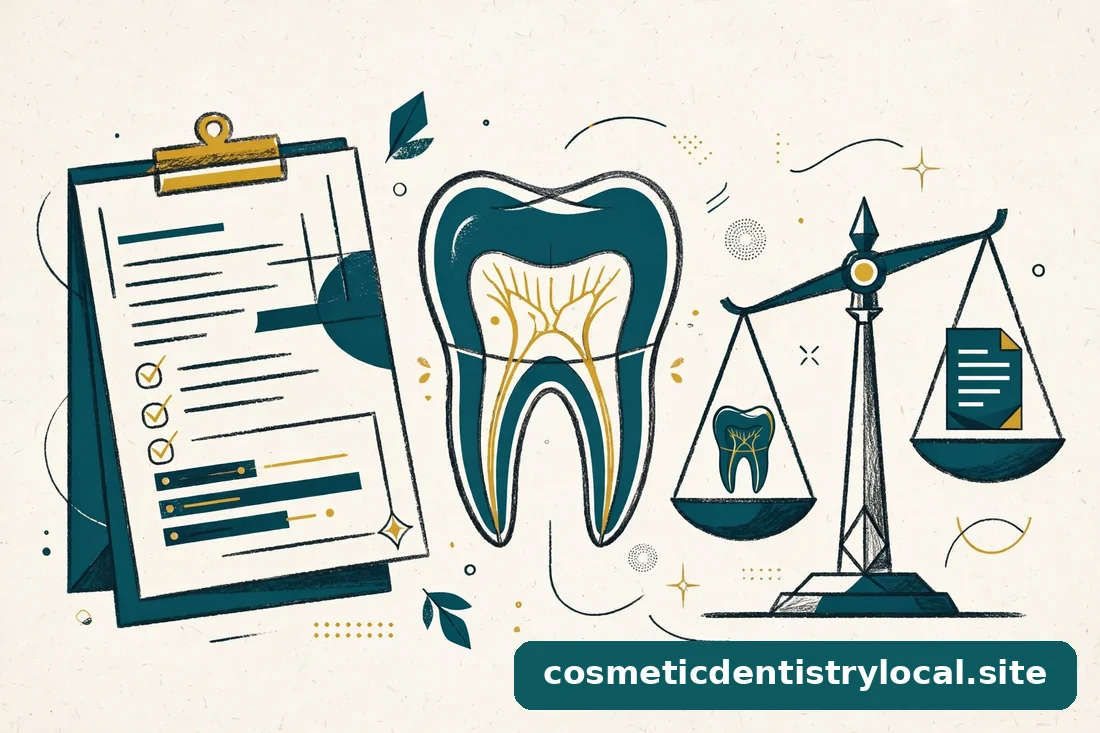
A smile makeover typically runs 3–8 weeks: consultation and design, one prep visit, two to three weeks of lab fabrication while you wear temporaries, then bonding day and a short follow-up.
A full mouth reconstruction typically runs 8–18 months, sometimes longer. The sequence looks like: evaluation and imaging, extraction and grafting where needed, months of healing, implant placement, months of integration, abutments and temporaries, then final crowns or bridges. Each stage has to succeed before the next begins. This is why reconstruction estimates should be treated as phased commitments — budget, time off, and patience included — rather than a single purchase.
Which one do you actually need?
Ask yourself these three questions before signing anything:
- Do my teeth hurt, shift, or break — or do I just dislike how they look? Pain, looseness, repeated fractures, and bite collapse point toward reconstruction. Pure dissatisfaction with color or shape on healthy teeth points toward a makeover.
- Did the treatment plan start with a health exam or a smile design? A plan that begins with photos and shade selection but skips gum probing and bite analysis is a makeover plan wearing reconstruction’s price tag.
- Is there a phased option? Many mouths genuinely need both: health restored first, cosmetics second. A trustworthy dentist will stage them honestly — reconstruction paid partly by insurance this year, makeover refinements out of pocket next year — rather than selling the whole thing as one inseparable package.
When in doubt, get a second opinion on the diagnosis, not just the quote. The most expensive error in this territory is paying makeover prices for a cosmetic solution to a medical problem.
Key takeaways
- A smile makeover ($5,000–$30,000+) is elective cosmetic work on healthy teeth; a full mouth reconstruction ($30,000–$100,000) rebuilds damaged teeth for function.
- Insurance rarely helps makeovers but can contribute to medically necessary reconstruction work — though annual caps keep that contribution modest.
- Reconstruction timelines run 8–18 months with surgical staging; makeovers usually finish in weeks.
- Match the plan to the problem: cosmetics on a diseased foundation is the classic expensive mistake.
FAQ
Can a smile makeover and full mouth reconstruction overlap?
Yes, in the same mouth at different times. Many patients reconstruct first (implants, crowns, bite work — partly insurance-assisted), then finish with a makeover layer (whitening, veneers on a few front teeth) once everything is healthy. Staging them keeps insurance classification clean.
Why do two dentists quote such different totals for “the same” reconstruction?
Because reconstruction isn’t a product — it’s a plan built on your bone, bite, and damage. Implant count, grafting needs, material choice, and sedation differ between mouths. Always ask for an itemized plan so you can compare line by line.
Is a full mouth reconstruction worth the cost compared to dentures?
It depends on your goals and budget. Implant-supported reconstruction preserves bone and chewing function far better than removable dentures, at a much higher price and longer timeline. Published clinic pricing shows removable over-dentures at a fraction of fixed full-arch work. There is no universally “right” answer — only the right one for your mouth and finances.
Does insurance cover any part of a smile makeover?
Almost never. Veneers, cosmetic whitening, and contouring are classified as elective. The narrow exceptions involve teeth damaged by trauma or structurally compromised — and even then, only the restorative portion may qualify, not the cosmetic upgrades around it.
How do I know if my dentist is selling a makeover I don’t need?
Look at what the exam covered. A plan built on photos, shade guides, and a smile preview — but no gum probing, no bite analysis, and no X-rays — is a cosmetic plan that skipped the medical screening. Ask directly whether any teeth show decay, gum disease, or bite problems, and whether the plan addresses them first. A dentist who answers those questions clearly, even if the answers complicate the sale, is one you can trust with the cosmetic work that follows.
Sources: 2026 US cost data grounded in opened sources — porcelain veneers $925–$2,500/tooth and composite $250–$1,500/tooth (CreamyTales 2026 price data); implant/reconstruction pricing from a published Chicago implant fee schedule; dental cost and benefits trends from the NADP 2026 State of the Market Report. Ranges reflect published practice pricing, not quotes.
This is general information, not medical or dental advice — talk to your dentist about your situation.