What Affects a Cosmetic Dentistry Quote? (17 Cost Factors)
Two dentists can quote $4,000 and $9,000 for the “same” six veneers — and both quotes can be honest. The difference is what’s inside the number: the lab, the material, the prep work, the geography, and a dozen other factors. This guide breaks down all seventeen, so you can compare quotes on substance instead of sticker price. (55 words)
Key takeaways
- The same procedure can vary 2–3x between providers — usually for legitimate reasons (lab, materials, expertise).
- Always compare itemized quotes, not totals: prep work, temporaries, and follow-ups hide in the gaps.
- Geography is the single biggest external factor; major metros run 30–50% above smaller markets.
- The cheapest quote is rarely the best value for irreversible work — understand what each dollar buys.
The big five: what moves quotes most
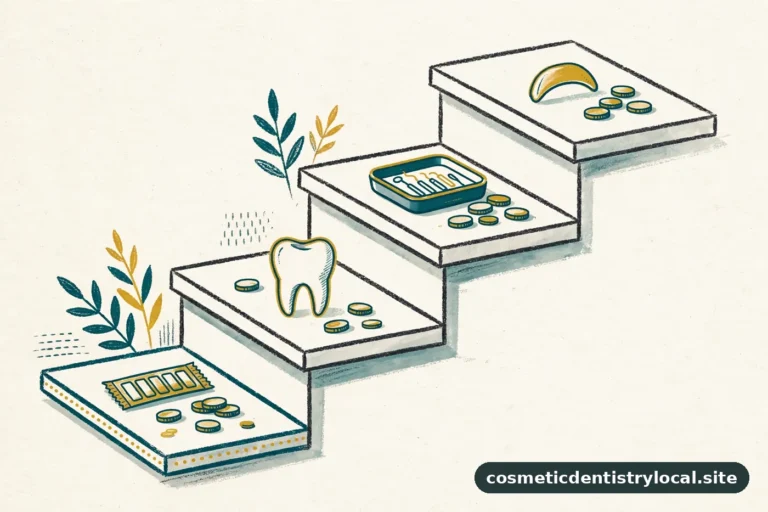
If you only remember five factors, make it these — they explain the majority of every quote gap:
- Which lab makes the restoration — the single biggest quality variable in veneers and crowns.
- The dentist’s cosmetic experience — artistry and case volume command premiums.
- Geography — rent and wages flow straight into the fee schedule.
- Materials — e.max vs feldspathic vs composite vs zirconia are different products at different prices.
- How much prep your mouth needs — healthy teeth vs teeth needing gum work, fillings, or bite correction first.
Now the full seventeen.
Factors 1–5: provider and place
1. The dentist’s cosmetic training and case volume. A dentist who places 200 veneer cases a year with advanced cosmetic training charges more than a general dentist doing their tenth case — and the results usually show it. You’re paying for judgment: shade matching, smile design, margin placement. For front-tooth work, this premium is often money well spent.
2. Specialist vs general dentist. Prosthodontists, and oral surgeons for implant placement, charge specialist fees. Front-tooth implants and complex reconstructions usually involve specialists; straightforward veneers usually don’t need one.
3. Geography. Published 2026 guides consistently show major metros (NYC, LA, Miami, Chicago) running 30–50% above smaller markets for identical procedures. A porcelain veneer averaging $1,359 nationally (Aspen Dental 2026 data, via published guides) might be $990 in one market and $2,169 in another (Source: https://financeply.com/article/667460-porcelain-veneers-too-expensive.html — Aspen Dental 2026 veneer range $990–$2,169, verified via search 2026-09-29).
4. Practice overhead. A boutique practice with a spa-like office, prime location, and large staff has higher costs than a lean suburban office — and those costs live in the fee schedule. Overhead doesn’t determine quality, but it does determine price.
5. How the quote was built: fee-for-service vs packaged. Some practices quote à la carte (each item priced separately); others bundle consultations, temporaries, and follow-ups into one figure. Neither is better — but you can’t compare a bundled quote to an unbundled one without itemizing both.
Factors 6–10: materials and lab
6. The dental lab. This deserves emphasis: for veneers and crowns, the lab technician is effectively a co-author of your result. Premium cosmetic labs charge the dentist $300–$600+ per unit; commodity labs charge far less. The difference shows in translucency, texture, and how natural the tooth looks. Ask which lab your dentist uses — it’s a fair question and the answer tells you a lot.
7. Material choice. Lithium disilicate (e.max), feldspathic porcelain, zirconia, and composite are genuinely different products: different strength, different aesthetics, different prices. Zirconia costs more than composite; hand-layered feldspathic from a master ceramist costs more than milled e.max. Make sure the quote names the material.
8. Number of units. Per-tooth pricing means totals scale linearly — but many practices offer modest multi-unit discounts (the lab and chair-time savings are real when work is batched). Always ask; it isn’t always volunteered.
9. Shade-matching complexity. Matching one veneer to existing teeth is harder (and pricier) than making a full set in a chosen shade. Single-tooth front work commands a premium for this reason — see our front-tooth implant cost guide for how the aesthetic zone drives pricing.
10. Digital vs conventional workflow. Intraoral scanners, digital smile design, and 3D-printed temporaries can improve precision — and practices that invested in the technology price accordingly. Digital isn’t automatically better, but it is measurably more predictable for complex cases.
Factors 11–14: your mouth’s starting point
11. Prep work required. Cleanings, X-rays, fillings, root canals, extractions — anything your mouth needs before cosmetic work begins. Two patients getting “six veneers” can have wildly different totals if one needs $2,000 of prep work first. This is the most common source of quote shock.
12. Gum work. Gum contouring ($150–$3,000 by extent) is frequently part of veneer and crown plans — the veneer can only look as good as the gumline it meets. If your quote doesn’t mention gums, ask whether they’re included or separate.
13. Bite and alignment issues. A misaligned bite concentrates force on restorations and shortens their life. Some quotes include bite adjustment or a night guard ($300–$600); others leave it out. For grinders, the guard isn’t optional — it’s lifespan insurance (see how long veneers last).
14. Existing restorations. Work around old crowns, large fillings, or previous cosmetic work takes more planning and chair time than a clean slate — and old work sometimes needs replacement before new work goes on.
Factors 15–17: the business side
15. Consultations, temporaries, and follow-ups. Is the consultation free or $100–$250? Are temporary veneers/crowns included or $300–$500 extra? How many follow-up visits are covered? These line items separate honest quotes from teaser quotes.
16. Sedation and comfort options. Standard local anesthetic is usually included; oral or IV sedation adds hundreds. Anxious patients should price this in from the start rather than discovering it mid-treatment.
17. Warranty and revision policy. A practice that includes a 5-year remake warranty and free shade adjustments has priced that risk into the quote — and that’s a feature, not a markup. Ask what happens if you’re unhappy with the shade, and who pays for revisions in year one.
For the market-wide price context behind all of this, our complete cosmetic dentistry cost guide and smile makeover cost guide give the 2026 ranges.
How to compare two quotes properly
With seventeen factors in play, here’s the practical method:
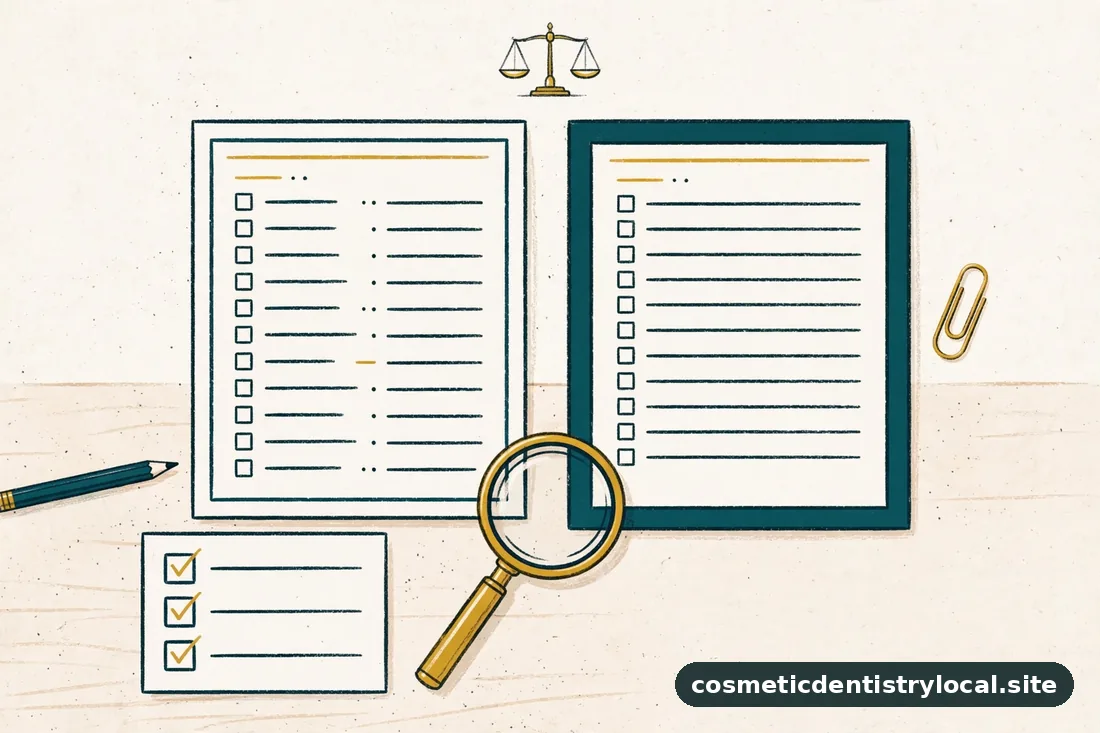
- Get both quotes itemized — same line items, same units, same materials named. If one quote won’t itemize, that’s information.
- Normalize what’s included: consultation, imaging, temporaries, follow-ups, warranty. Add missing items to the cheaper quote before comparing.
- Ask both dentists the same five questions: Which lab? Which material? What’s the prep work? What’s the revision policy? What does the warranty require of me?
- Check the per-unit math, not just the total. A $9,000 quote for eight veneers ($1,125/tooth) can be better value than a $7,000 quote for six ($1,167/tooth).
- Weight irreversibility. For veneers, crowns, and implants, a 20% premium for a demonstrably better provider is usually the rational choice. For reversible work (whitening, bonding), price-shop freely.
- Get the timeline in writing. A cheaper quote that takes eight months of appointments has a real cost in your time.
And the meta-rule: a quote you understand beats a quote that’s merely lower. If a dentist can’t explain why their number is what it is, in terms of these seventeen factors, keep looking.
FAQ
Why is there such a big price range for veneers?
Because “veneers” isn’t one product — it’s a procedure with seventeen variables. A $925 veneer might use a commodity lab and standard material with minimal prep; a $2,500 veneer might involve a master ceramist, premium e.max, gum contouring, and a 5-year warranty. Both are “porcelain veneers.” The itemized quote tells you which one you’re looking at.
Should I just pick the cheapest quote?
For reversible treatments (whitening, bonding), price-shopping is reasonable. For irreversible work (veneers, crowns, implants), the cheapest quote is the riskiest choice — revision work costs more than the original procedure, and you can’t undo enamel removal. Compare on the seventeen factors above, then decide what the premium buys.
Do more expensive dentists get better results?
Not automatically — but price correlates with the inputs that drive results: experienced cosmetic dentists, premium labs, better materials, and more chair time per case. The correlation is real but imperfect, which is why before-and-after photos of the dentist’s own cases (not stock photos) matter more than the price tag. Ask to see them.
How do I know if prep work in my quote is really necessary?
Ask the dentist to show you: X-rays, photos, and a plain-English explanation of what happens if the prep work is skipped. “Your gums need contouring before veneers or the margins will show” is verifiable — you can see it in the photos. Vague prep charges with no visual evidence deserve a second opinion.
Do cosmetic dentistry quotes expire?
Often, yes — most written treatment plans are honored for 6–12 months, and some practices re-price after 30 days if lab fees change. If you’re comparison shopping across months, confirm the quote is still valid before you commit. A quote that “expired” isn’t necessarily a bait-and-switch; material and lab costs genuinely move.
Is a second opinion worth it for a big quote?
For anything over a few thousand dollars, absolutely — and it’s usually free or low-cost for cosmetic consults. Bring your itemized first quote and ask the second dentist to price the same treatment plan. If the numbers differ wildly, the seventeen factors above will tell you why: different labs, different materials, or different assumptions about prep work.
The Smile Ledger is a price-research publication. This is general information, not medical or dental advice — talk to your dentist about your situation.