Cheapest Ways to Fix Your Smile in 2026 (Honest Budget Guide)
The cheapest legitimate smile fixes start at $20 for whitening strips and $100–$600 per tooth for dental bonding — both real treatments, not gimmicks. Dental schools and dental savings plans can cut professional work by 30–50%. What you should not do is chase the absolute lowest price on irreversible work without understanding the tradeoffs. (60 words)
Key takeaways
- Cheapest real fixes: whitening strips ($20–$60), bonding ($100–$600/tooth), custom trays ($200–$500).
- Dental schools typically charge 30–50% less than private practice, with faculty supervision.
- Dental savings plans cut 30–50% off many procedures with no waiting periods or annual caps.
- Never bargain-hunt irreversible work (veneers, implants) on price alone — revision costs dwarf the savings.

The budget ladder: cheapest first
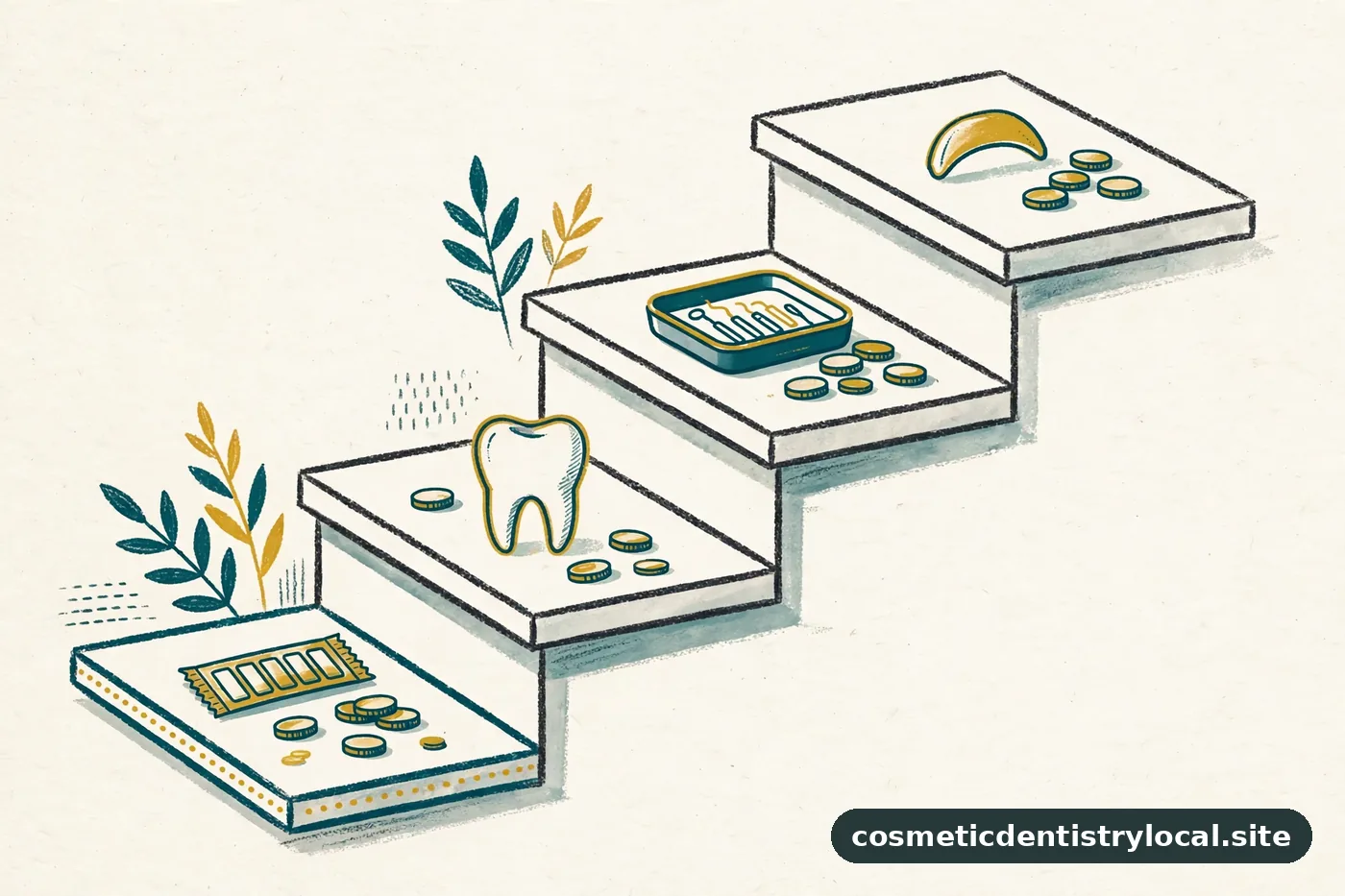
Ranked by typical starting cost, with what each one actually fixes:
- Whitening strips — $20–$60. The cheapest visible change you can buy. Effective for light surface stains; won’t fix chips, gaps, shape, or intrinsic discoloration. See our dentist vs at-home whitening guide for the honest limits.
- Dental bonding — $100–$600 per tooth. The cheapest structural fix: chips, small gaps, uneven edges, minor shape issues. Single visit, minimal enamel removal. Our bonding cost guide has the details.
- Dentist custom take-home trays — $200–$500. Professional whitening strength at a fraction of in-office prices, with trays that last for years.
- In-office whitening — $400–$1,000. The fastest dramatic change; worth it before events or photos.
- Composite veneers — $250–$1,500 per tooth. The budget veneer: lab or chairside, 5–7 year lifespan, easier to repair than porcelain.
- Gum contouring — $150–$3,000 by extent. A gummy smile fix that changes the whole smile’s proportions; per-tooth work can be surprisingly affordable.
- Porcelain veneers — $925–$2,500 per tooth. The premium tier. Worth saving for rather than substituting with something that won’t satisfy you — a $400 compromise you hate is more expensive than a $1,400 veneer you love.
The full price context lives in our cosmetic dentistry cost guide.
Dental schools: the real discount
US dental schools run teaching clinics where students perform treatment under direct faculty supervision, typically at 30–50% below private-practice fees. For cosmetic work this can mean bonding at a fraction of the usual price, and some schools offer veneer and whitening programs.
The tradeoffs are time and scheduling, not quality of supervision:
- Appointments take longer — students work carefully and faculty check each step. A bonding appointment might run twice as long.
- Scheduling is less flexible — clinics run on academic calendars with limited hours.
- Case selection — schools choose cases that fit their teaching needs; complex cosmetic reconstructions may not qualify, simple-to-moderate cases will.
- Multiple visits are the norm even for simple work.
How to find one: search the American Dental Association’s list of accredited dental schools, or look for “[your city] dental school clinic.” Call and ask specifically whether their clinic offers cosmetic procedures (not all do) and what the current wait time is. For students on a tight budget with flexible schedules, this is the single best value in dentistry.
Dental savings plans
Dental savings plans are memberships — not insurance — that give discounted rates at participating dentists. Published figures cite average savings around 50% on many procedures, plans from about $7/month billed annually, and no deductibles, waiting periods, or annual maximums (Source: https://www.dentalplans.com/blog/what-dental-insurance-doesnt-cover/ — page opened and verified 2026-09-29).
Why they matter for budget cosmetic work: insurance excludes cosmetic procedures, but savings-plan discounts still apply to them. A $1,200 veneer discounted 40% is $720 — the annual membership pays for itself many times over on a single tooth. Check the plan’s fee schedule for your area before joining, and confirm your preferred dentist participates.
Combine with financing strategies — savings-plan discount first, then an in-office payment plan or HSA/FSA dollars on the reduced total.
Phased treatment
The most underused budget strategy costs nothing: do the work in stages.
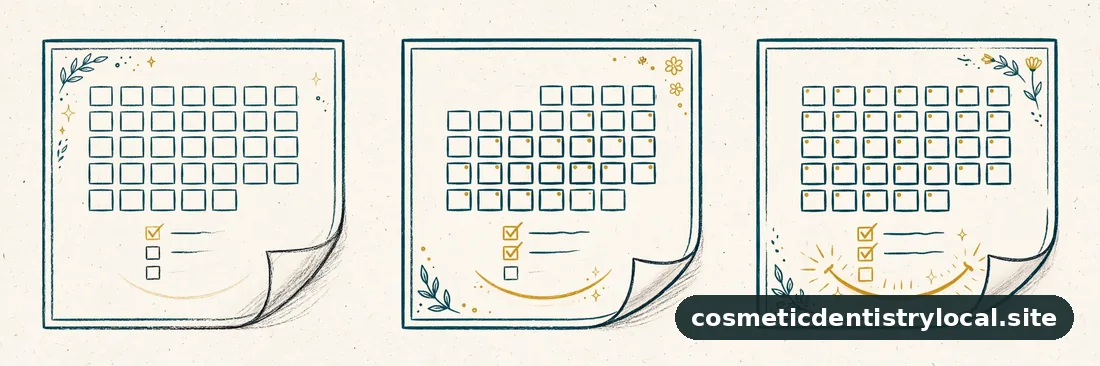
- Visible teeth first. A six-veneer plan becomes two phases of three — half the bill now, the rest when you’ve saved more. You also get to evaluate the result before committing to phase two.
- Whiten before you veneer. Brighter natural teeth can reduce the number of veneers needed, since veneers are shade-matched to surrounding teeth.
- Health before cosmetics, always. Fix cavities and gum disease first (often partially covered by insurance), then spend cosmetic dollars on a healthy foundation. Cosmetic work on unhealthy teeth fails early — the most expensive outcome of all.
- Across calendar years. Any covered restorative work can be timed to use two years of insurance maximums; FSA contributions can fund two years of a large plan.
Ask your dentist for a written phased plan with per-phase pricing. A good cosmetic dentist plans in stages routinely; a dentist who insists everything must be done at once deserves a second opinion.
Dental tourism: the honest math
Veneers at 60–80% less in Mexico, Costa Rica, or Turkey — the headline numbers are real. The honest accounting includes what the brochures leave out:
- Follow-up is local or nothing. If a veneer chips or the bite feels wrong two months later, you’re either flying back or paying a US dentist to fix someone else’s work — and many US dentists are reluctant to take on revision cases.
- Warranty enforcement across borders is difficult in practice, whatever the paperwork says.
- Standard-of-care differences exist: sterilization, materials sourcing, and recourse if something goes wrong.
- The real price includes flights, hotels, time off work, and potential revision costs. For a single tooth, tourism rarely pencils out; the math improves (relatively) for full-mouth work — which is also where the stakes are highest.
This isn’t a “never” — it’s a “price it completely.” Get the US quote first, then add all tourism costs, then add a contingency for one revision visit. If the gap is still dramatic and you’ve researched the specific clinic thoroughly (not the marketing agency), it’s your call. Never decide based on the procedure price alone.
What to never cheap out on
Some corners cost more than they save:
- Irreversible work on price alone. Veneers and implants can’t be undone. The cheapest provider is rarely the best value — revision work costs more than doing it right once.
- Mail-order veneer kits and snap-on covers sold without a dentist’s involvement: they don’t fix underlying problems, can trap decay underneath, and the “after” photos are marketing — our mail-order veneer kit safety guide documents the real risks and hidden costs. See a dentist for an evaluation first.
- Unlicensed or pop-up whitening (mall kiosks, spas): no dental assessment, no gum protection, no recourse. The per-session price looks cheap until something goes wrong.
- Skipping the exam. A $100–$200 exam before cosmetic work is the cheapest insurance against whitening a cavity or veneering a dying tooth.
The through-line: cheap is fine for reversible, low-risk treatments (strips, trays, bonding). For irreversible work, optimize for skill and value — not the lowest bid. Our quote-factors guide explains what actually drives price differences between providers.
Three sample budgets
To make this concrete, here are three realistic budget plans:
- $300 budget: A dental exam ($100–$200) plus whitening strips ($20–$60). You learn exactly what your teeth need, and light stains visibly improve. The exam is the highest-value line item — it tells you whether the cheap fixes are enough.
- $1,000 budget: Exam, custom take-home trays ($200–$500), and bonding on one or two chipped teeth ($100–$600 each). This combination fixes stains and small structural flaws — the biggest visible change per dollar in cosmetic dentistry.
- $2,500 budget: Everything above, plus a dental savings plan membership and phased composite veneers on the two most visible teeth. You’re now into real smile-transformation territory without touching four figures per tooth.
In each case, the exam comes first and the reversible treatments come before the irreversible ones. That’s the whole budget philosophy in one sentence.
FAQ
What’s the absolute cheapest way to improve my smile?
Whitening strips ($20–$60) for stains, or dental bonding ($100–$600 per tooth) for chips and small gaps. Both are legitimate, dentist-provided or dentist-approved treatments — not compromises. Start there before considering anything that costs four figures.
Are dental schools safe for cosmetic work?
Teaching clinics are supervised by faculty dentists who check every step, and students tend to work very carefully. The tradeoffs are longer appointments and less flexible scheduling, not unsupervised work. For straightforward cosmetic procedures like bonding and whitening, they’re a well-established value option.
Can I negotiate prices with a dentist?
Often, yes — especially for large treatment plans. Ask about cash-pay discounts (commonly 5–10%), phased treatment pricing, and whether the practice price-matches a written quote from another office. What’s not negotiable is the clinical plan itself; a dentist discounting the treatment rather than the price is a red flag.
Is financing a cheap option or an expensive one?
It depends entirely on the terms. A 0% in-office payment plan is effectively free financing. A deferred-interest medical credit card you can’t clear in time is one of the most expensive ways to pay. Always compare the total cost including interest and fees, not the monthly payment. Our financing guide breaks down every option.
The Smile Ledger is a price-research publication. This is general information, not medical or dental advice — talk to your dentist about your situation.