Mail-Order Veneer Kits in 2026: Safety, Risks, and Hidden Costs
Mail-order veneer kits cost $300–$1,000 per arch in 2026 — far less than bonded porcelain at $925–$2,500 per tooth. They can be a temporary cosmetic cover, but they aren’t dental treatment: experts warn they can trap food and bacteria, raising decay and gum disease risk, and poor fit can damage enamel. Here’s the breakdown — safety facts first, hidden costs second.
The short answer
Snap-on mail-order veneers are a removable cosmetic cover, not a dental restoration. They can look good in photos for an event, but they sit over your real teeth without professional fitting or screening — and experts warn that trapped food and bacteria under a poor-fitting appliance can raise the risk of tooth decay and gum disease. If your teeth have decay, gum disease, looseness, or pain, a cosmetic cover is the wrong move; get treatment first. For everyone else: know the real costs (impression remakes, shipping, replacements), keep the appliance clean, and treat it as temporary.
What these kits actually are
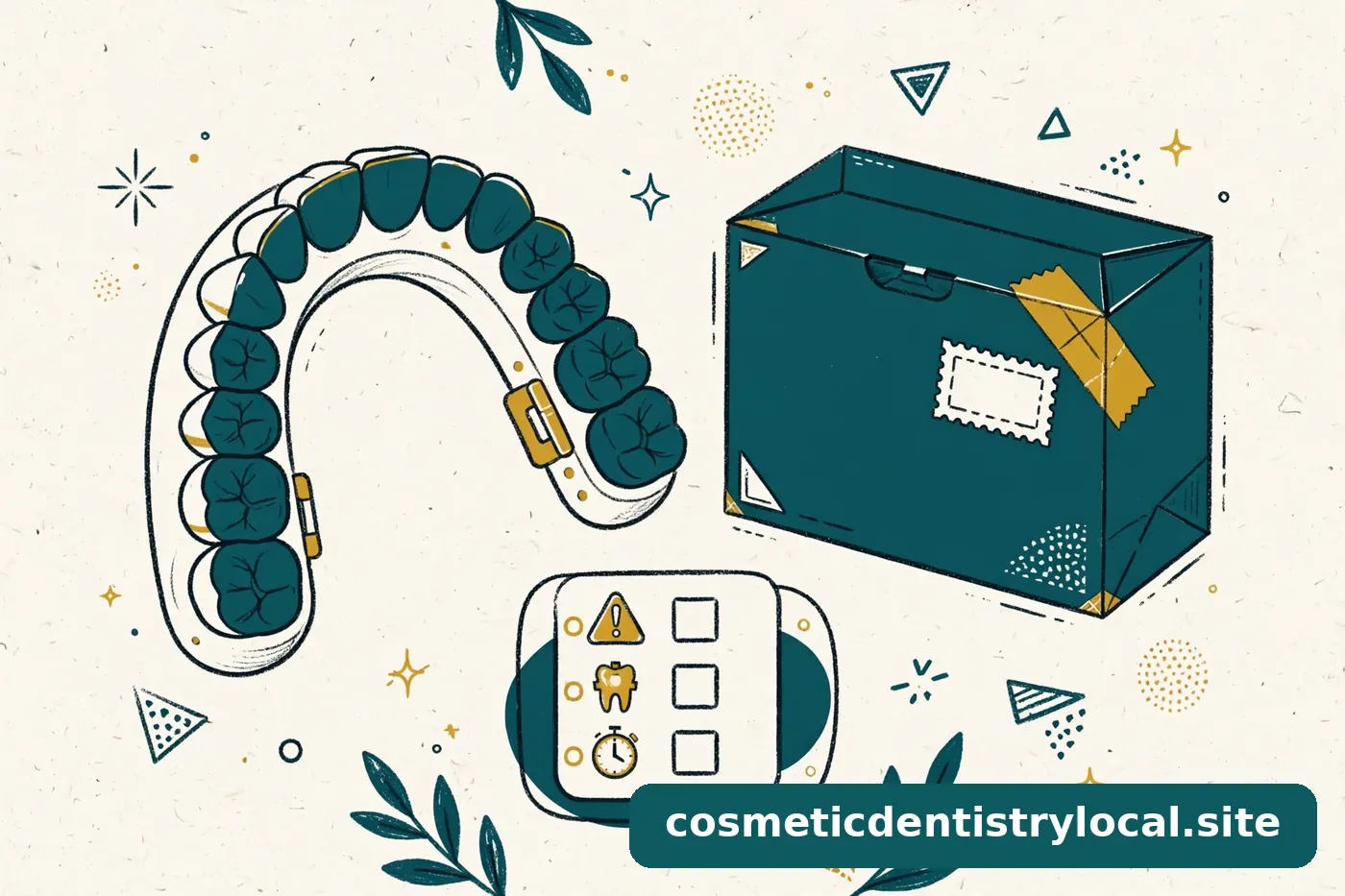
The mail-order model: you buy online, receive an impression kit, bite into the putty, mail the impressions back, and receive a custom-molded removable arch that clips over your existing teeth — no drilling, no anesthesia, no dental visit. Professional snap-on veneers are removable, custom-made overlays: a non-permanent option for a quick smile upgrade that doesn’t offer the durability or stain resistance of bonded porcelain (Roomgic 2026 guide).
That description matters because of what it leaves out: no clinical exam, no screening for cavities or gum disease, no bite analysis, and no professional fitting appointment. The appliance is made from impressions you took yourself, at your kitchen table, with no one checking whether your teeth and gums are healthy enough to sit under a cover for hours a day.
Compare that to bonded porcelain: a licensed dentist examines you, removes ~0.5 mm of enamel, works with a lab, and bonds the shell permanently — at $925–$2,500 per tooth (CreamyTales). See our full porcelain veneer cost tables for the per-tooth math.
What they cost — and the hidden costs
Published 2026 pricing puts snap-on/removable veneers at $300–$1,000 per arch (Roomgic 2026 guide), with a typical lifespan of 1–5 years. That looks like an unbeatable deal next to $8,000+ for bonded porcelain — until you itemize what buyers actually report spending:
- Impression kits and remakes. A bad at-home impression — easy to make, hard to spot yourself — means a poor-fitting appliance. Remake policies vary; some companies charge for replacement impressions, and each remake adds weeks.
- Shipping both ways. Multiple companies charge for kit shipping, appliance shipping, and remake shipping. Budget $20–$60+ in postage across the process.
- One or two arches. The headline price often covers one arch; a full smile needs two.
- Adjustments and refits. A slightly tight or loose fit usually can’t be fixed at a dentist’s office — you’re mailing it back or living with it.
- Replacements. At a 1–5 year lifespan, a snap-on arch bought in 2026 may need replacing by 2028–2031. Two replacements turn a “$600 solution” into an $1,800+ one.
- Warranties and return windows. Read the return policy before paying. Some companies offer short inspection windows; once worn for weeks, refunds get difficult.
None of this makes mail-order veneers a scam — many buyers get a usable cosmetic appliance. But the honest price comparison is lifecycle cost, not the headline number: a $600 arch replaced twice in five years costs $1,800 for a temporary cover, while $600 of dentist-made bonding can be a permanent, professionally fitted improvement. Our budget smile guide runs the full cheapest-options math.
Safety: what the experts actually say
The ADA has weighed in on exactly this category. Its Morning Huddle coverage warns that temporary plastic snap-on veneers — which gained popularity on social media — “can trap food particles against the tooth’s surface, thereby increasing the risk of tooth decay and gum disease,” don’t match porcelain quality, “can damage the tooth enamel,” and advises anyone wanting veneers to seek licensed dental professionals (ADA Morning Huddle).
Those aren’t the only documented concerns with removable appliances:
- Hidden disease progression. The biggest structural risk isn’t the plastic — it’s what it covers. Placing any cosmetic cover over untreated decay or gum disease can worsen existing problems. A 2026 snap-on market analysis puts the rule simply: “clean teeth first, veneers second” — they should never be used to ignore pain, swelling, bleeding gums, loose teeth, or untreated dental disease (Medium/Veneervibe).
- Fit problems. Poorly fitting removable appliances may feel bulky, affect speech, interfere with eating, and make oral hygiene harder. They can irritate the gumline if the fit is poor and crack with hard or sticky foods.
- Unlicensed “veneer techs.” A separate but related risk: social-media “veneer technicians” offering cheap bonded veneer procedures at salons or private homes. The ADA warns that improper veneer procedures by unlicensed individuals can cause severe pain, nerve damage, and tooth loss — and practicing dentistry without a license is illegal (AP via SRN News). A mail-order snap-on kit is not the same thing as a veneer tech’s bonded work — the latter is far riskier — but both bypass the licensed screening that protects your teeth.
To be fair and factual: none of this means snap-on appliances are automatically unsafe. Dentists themselves use professionally made removable overlays as temporaries and trial smiles. The difference is professional screening and fitting — exactly what the mail-order model removes.
Who should not use them
Skip mail-order veneer kits and see a dentist first if any of these apply:
- Tooth pain, swelling, bleeding gums, or loose teeth — these need treatment, not a cover.
- Untreated cavities or gum disease — the ADA specifically advises treating these before any veneer work, because covering unhealthy teeth can worsen them.
- Very few remaining teeth or unstable teeth — the appliance depends on your existing teeth for support, and suitability varies considerably with how many remain and their condition.
- You plan to eat with them daily — they’re generally designed for appearance, not chewing, unless the maker specifically states otherwise.
If you buy one anyway: minimizing risk
If you decide the kit is right for your situation, these steps reduce the risks meaningfully:
- Get a dental checkup first. One exam confirming your teeth and gums are healthy eliminates the biggest danger category. This is the single most important step.
- Choose a clearly removable design. It should state plainly that it is not permanently bonded to teeth.
- Read the material details and cleaning directions before the item arrives, and follow them.
- Remove it for meals unless the maker specifically says it’s designed for eating. Food trapped under the appliance is the decay mechanism experts warn about.
- Clean teeth first, then the appliance, daily. Never place it over unbrushed teeth.
- Keep your receipt, order details, and the return policy until you’ve worn and inspected it.
- Remove it promptly if it causes pain, bleeding, swelling, pressure, speech problems that don’t resolve, or difficulty removing it — and see a dentist.
Cheaper safe alternatives
If the goal is a better smile on a tight budget, there are professionally supervised options in the same price neighborhood as snap-on kits:
- Professional whitening: $20–$60 for strips, $200–$500 for dentist custom trays — real improvement, zero appliances in your mouth.
- Composite bonding: $100–$600 per tooth, single visit, professionally fitted, permanent.
- Dental school cosmetic clinics: supervised residents at 30–50% less than private practices.
- Our complete guide to cosmetic dentistry costs compares every budget route side by side.
Key takeaways
- Mail-order snap-on veneers: ~$300–$1,000/arch, 1–5 year lifespan; hidden costs include remakes, shipping, replacements, and return-window limits.
- ADA experts warn: snap-on veneers can trap food/bacteria (decay and gum disease risk) and can damage enamel; they advise licensed professionals for veneer work.
- They are a cosmetic cover, not dental treatment — never use them over pain, decay, gum disease, or loose teeth.
- A dental checkup first + daily cleaning + removing for meals cuts the risk substantially; bonding and whitening may cost less over time.
FAQ
How do I spot a trustworthy mail-order company?
Look for: clear material disclosure, a stated remake policy, a real return window (not “all sales final”), cleaning instructions published before purchase, and customer support that answers before you buy. Red flags: no physical business address, no mention of what happens if the fit is wrong, pressure to skip the dental checkup, and marketing that promises the appliance can “fix” decay or gum problems. A company selling a cosmetic cover honestly will tell you its limits.
Are mail-order veneers safe?
They’re not automatically unsafe, but they’re not risk-free either. The main documented concerns are food/bacteria trapped under the appliance (raising decay and gum disease risk), enamel damage from poor fit, and — the biggest one — covering up untreated dental disease without a professional exam. Used over clean, healthy teeth with good hygiene, the risk is much lower. The ADA advises consulting licensed dental professionals.
How much do snap-on veneers cost in 2026?
Published 2026 data puts them at $300–$1,000 per arch. The real cost includes impression remakes, shipping, a possible second arch, and replacements every 1–5 years — so compare lifecycle cost, not the headline price.
Can I eat with snap-on veneers?
Generally no — use them for appearance, not eating, unless the maker specifically states the appliance is designed for it. Eating with them risks cracking the appliance and trapping food against your teeth.
Are snap-on veneers the same as what “veneer technicians” do on social media?
No, and the distinction matters. Snap-on kits are removable covers you place yourself. “Veneer technicians” perform bonded, enamel-altering procedures without a license — the ADA warns these can cause severe pain, nerve damage, and tooth loss, and the practice is illegal. The bonded unlicensed work is far more dangerous than a removable cover.
Sources: opened and verified — ADA Morning Huddle on DIY snap-on veneers (trap-food/decay/gum risk, enamel damage, seek licensed professionals); Roomgic 2026 guide ($300–$1,000/arch, 1–5 yr lifespan); CreamyTales 2026 (bonded porcelain $925–$2,500/tooth); AP/SRN News on unlicensed veneer technicians (illegal, nerve-damage/pain/tooth-loss risks).
This is general information, not medical or dental advice — talk to your dentist about your situation.