Front Tooth Implant Cost in 2026 (The Cosmetic View)
A single front-tooth implant in the US typically costs $3,000 to $6,000 or more, all-in, in 2026. Front teeth sit in what dentists call the aesthetic zone, so the bill often runs higher than a back-tooth implant — the visible crown needs custom shade matching and careful gumline shaping.
Key takeaways
- A complete front-tooth implant (post, abutment, crown) typically runs $3,000–$6,000+ in 2026.
- The crown is where the cosmetic premium lives: matching one front tooth to its neighbors takes custom lab work.
- Temporary crowns ($300–$500) and bone grafting ($200–$3,000) are the two add-ons most likely to move the total.
- If the tooth root can be saved, a veneer or crown may be the cheaper cosmetic route — implants are for when the tooth is gone or unsaveable.
Why a front tooth is a different implant job
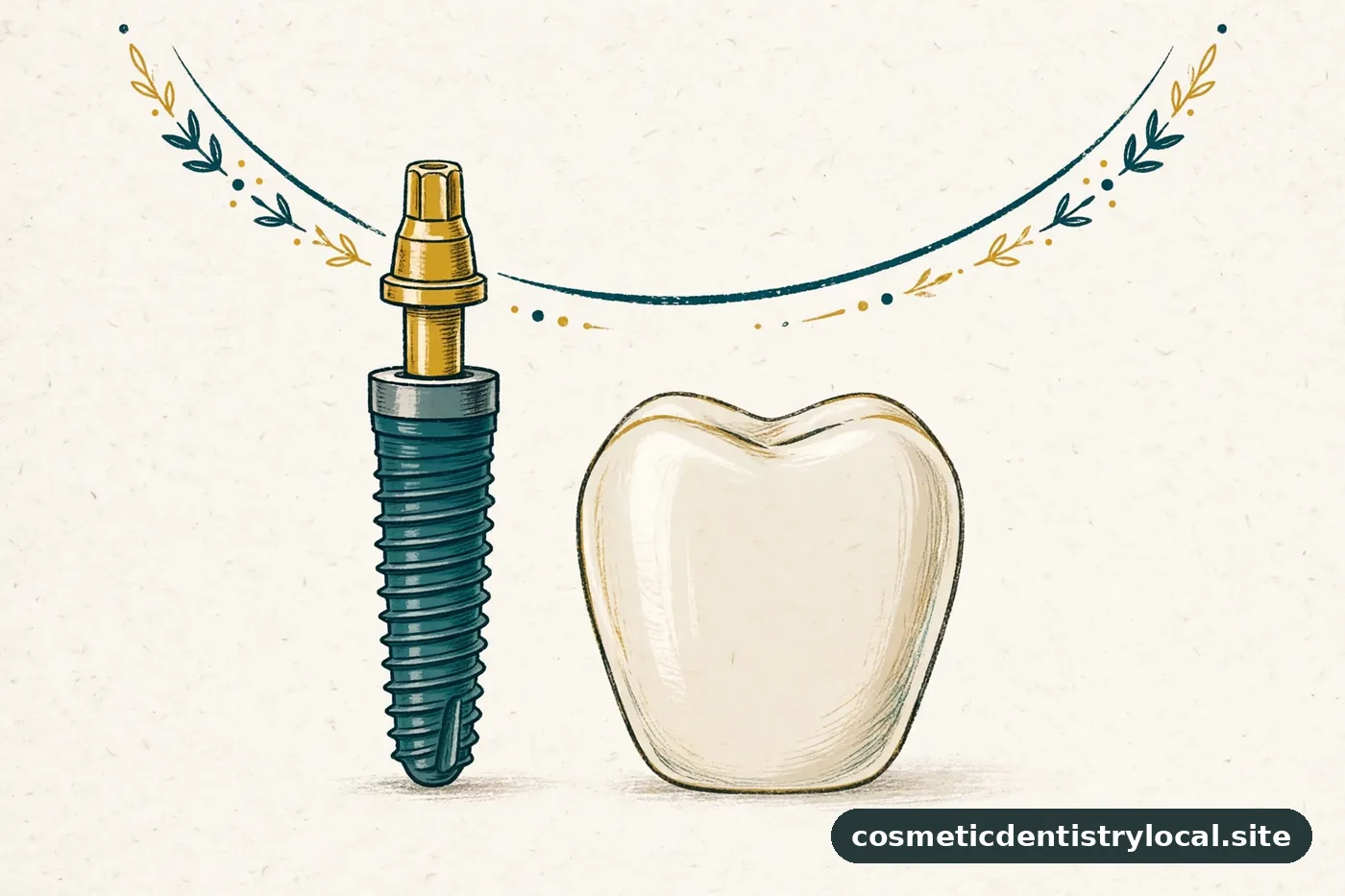
An implant in the back of the mouth is mostly a mechanical job: a titanium post, a connector (the abutment), and a crown that needs to chew. A front-tooth implant has the same three parts, but the crown has to pass as the tooth you were born with — at conversational distance, in daylight, next to its natural neighbors.
That changes the work. The dentist or prosthodontist plans not just where the post goes, but how the gum tissue will drape around the crown. If the gum recedes a millimeter too far, a gray shadow of the abutment can show through — something patients notice immediately and that is expensive to correct after the fact. This is why many dentists refer front-tooth implant cases to specialists, and why the “cosmetic” label on this procedure is not just marketing language. It describes a stricter standard of finish.
Site 12’s scope stays here, on the visible smile: a general implant overview belongs elsewhere. What matters for this site’s readers is that the aesthetic finish is a cost driver, not a free upgrade.
What’s actually included in the quote
A front-tooth implant quote is usually presented as one all-in figure, but it is built from separate line items. Knowing the pieces helps you compare two quotes that look different on paper:
- Initial consultation and imaging ($100–$200, sometimes free): includes a 3D cone-beam scan ($150–$500) used to map bone and nerve positions.
- Implant post placement ($1,500–$2,000): the surgical step where the titanium fixture goes into the jawbone.
- Abutment ($300–$500, up to $1,000 for custom): the connector between post and crown. Front teeth often need a custom-milled abutment rather than a stock one, so the gumline looks natural.
- Final crown ($1,000–$2,000, up to $3,000 in major metros): the visible tooth. For front teeth this is almost always an all-ceramic or zirconia crown from a high-end lab, shade-matched chairside.
- Healing and follow-up visits: usually bundled into the surgical fee.
Published 2026 breakdowns put the complete single-tooth implant at $3,000–$5,000 all-in, with front-zone cases quoted at $3,200–$5,500 because the aesthetic crown work commands a premium (Source: https://advancedsmile.dental/single-tooth-implant-cost-without-insurance/ — figures verified via published 2026 US market data). In high-cost metros, the same job can push toward $6,000–$7,000.
2026 price ranges, component by component
| Component | Typical US range (2026) | Notes for front teeth |
|---|---|---|
| Implant post + surgery | $1,500–$2,000 | Specialist placement may add cost |
| Abutment | $300–$500 (custom up to $1,000) | Custom more common up front |
| All-ceramic crown | $1,000–$2,500 | Shade matching is the premium |
| Bone graft (if needed) | $200–$3,000 | Front-tooth sockets often need grafting |
| Temporary crown during healing | $300–$500 | Cosmetic necessity, not optional for most |
| Tooth extraction (if needed) | $75–$650 | Simple vs surgical extraction |
| All-in total | $3,000–$6,000+ | High-cost metros run higher |
These ranges reflect published 2026 US pricing guides; your quote depends on your dentist, your city, and your bone situation.
Why front teeth cost more than molars
It is worth naming the four reasons explicitly, because they explain almost every price gap between two quotes:
- The crown is a custom cosmetic product. A molar crown just needs to look like a tooth. A front crown needs to look like that tooth — matching the translucency, shape, and shade of its neighbors. Labs charge more for this level of work, and the dentist may send the crown back for adjustments more than once.
- The gumline is part of the result. In the aesthetic zone, the soft tissue contour around the crown is as visible as the crown itself. Preserving or rebuilding that contour (sometimes with grafting) is skilled, time-consuming work.
- Specialists do most of this work. Oral surgeons, periodontists, and prosthodontists place and restore the majority of front-tooth implants. Their fees run higher than a general dentist’s, and for good reason — the margin for visible error is small.
- You need something to smile with while it heals. An implant post needs 3–6 months to fuse with the bone before the final crown goes on. A missing front tooth is not something most people will walk around with for half a year, so a temporary crown ($300–$500) is effectively mandatory.
The extras that surprise people
Quotes sometimes leave items out that get billed separately. Before you agree to a number, ask whether it includes each of these:
- Bone grafting. Front teeth lost to trauma or infection often take some jawbone with them. If there isn’t enough bone to hold the post, grafting ($200–$3,000 depending on type) comes first — and it adds months to the timeline.
- The temporary crown. Some quotes list the final crown but price the temporary separately. Ask.
- Sedation or anesthesia upgrades. Standard local anesthetic is usually included; oral or IV sedation is an add-on that can run a few hundred dollars.
- Extraction. If the damaged tooth is still there, removing it is a separate procedure ($75–$650).
- Revision work. If the gumline heals unevenly around the implant, minor corrective work may be needed. Ask who pays for revisions within the first year.
A written, itemized treatment plan is the fix for all of this. It is also the single best comparison tool when you get a second opinion — which, for a multi-thousand-dollar procedure in the aesthetic zone, is worth doing.
Implant vs veneer for a damaged front tooth
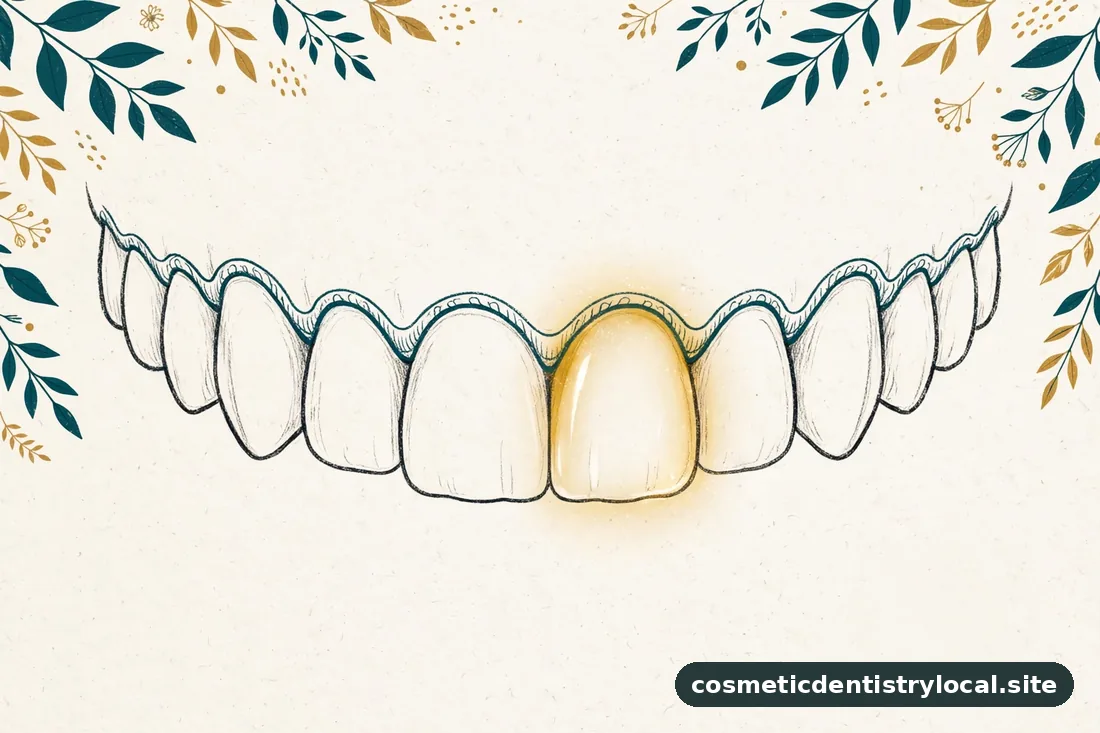
If the front tooth is still there — chipped, cracked, discolored, or misshapen — an implant is usually not the first option. Implants replace a missing tooth. If the root is healthy, the cosmetic routes are:
- Porcelain veneer ($925–$2,500 per tooth): covers the visible surface; the tooth stays in place. Our full veneer price table breaks this down per tooth and per smile.
- Dental crown ($800–$3,000 per tooth): caps the whole tooth; used when the tooth is structurally weakened.
- Composite bonding ($100–$600 per tooth): the budget fix for small chips and gaps.
The honest decision tree: saveable tooth → veneer or crown. Unsaveable or missing tooth → implant or bridge. A dentist who suggests an implant for a tooth that could take a veneer deserves a follow-up question about why — and a second opinion. Conversely, a tooth with a fractured root or failed root canal is often genuinely better served by an implant than by another round of heroic dentistry.
For the full picture of multi-procedure plans, see our smile makeover cost guide and the complete cosmetic dentistry cost guide.
Keeping the aesthetic result from costing more
You can’t bargain the biology, but you can control the avoidable add-ons:
- Act sooner rather than later. Bone shrinks after a tooth is lost. Waiting a year or two can turn a straightforward implant into a grafting case — the most common reason a $4,000 quote becomes a $6,000 one.
- Ask about the lab. The price difference between a commodity lab crown and a premium cosmetic lab crown is real, and for a front tooth the premium is usually money well spent. Ask which lab the dentist uses and what happens if the shade is wrong.
- Wear the night guard. If you grind your teeth, a custom night guard ($300–$600) protects the implant crown the same way it protects natural teeth — and crown replacement is not cheap.
- Understand the warranty. Some implant systems and labs offer multi-year warranties on the crown. Get the terms in writing; “lifetime” claims usually cover the post, not the visible crown.
FAQ
Is a front-tooth implant more expensive than a molar implant?
Usually, yes — by roughly $500–$1,500 in the US. The post and surgery cost about the same, but the custom-matched cosmetic crown, custom abutment, and gumline work are front-tooth-specific premiums. The temporary crown during healing is also effectively mandatory for a visible tooth.
Can insurance cover any part of a front-tooth implant?
Dental insurance rarely covers implants done for cosmetic reasons, and many plans exclude implants entirely. When coverage exists, it typically applies to the extraction or the crown portion, not the implant itself. Our guide on whether dental insurance covers cosmetic dentistry covers the exceptions — accident reconstruction being the main one.
How long does a front-tooth implant take from start to finish?
Typically 4–8 months: extraction and any grafting first (with 3–6 months of healing), then post placement, then another 3–6 months for the bone to fuse with the post, then the final crown. Same-day “teeth in a day” approaches exist but are less common for single front teeth where the cosmetic result is the priority.
Will the implant crown match my other teeth exactly?
A skilled cosmetic dentist with a good lab can get very close — shade, translucency, and shape matched to your neighboring teeth. “Exactly” is an overpromise no honest dentist makes; teeth are translucent and lighting changes them. Ask to see the lab’s shade guide at the try-in appointment and review the crown in natural light before it’s permanently bonded.
The Smile Ledger is a price-research publication. This is general information, not medical or dental advice — talk to your dentist about your situation.